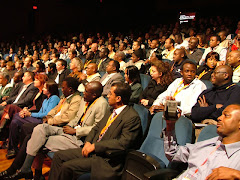
The
Regional Commissioner for Mara region has said that state owned industrial firms
that once operated in Mara region– but now stalled – must be given new lease on
life. Dr Charles Mlingwa said on Friday
last week that “Mara was home to thriving industries like Mutex and dairy
factories they are not operating now they must be made to operate under
whatever circumstances in order to boost the regional economy”, he emphasized. The
RC was speaking during the region’s 2017 Press Freedom Day hosted by Mara
Regional Press Club (MRPC) at Matvilla Beach and attended by key development
partners including North Mara Gold Mine which has spent significant resources
on the development of local communities in the area. The RC is bullish that
Mara Region was geared for bigger things to come: new large factories to
produce sugar, cooking oil and cement, among others. Investment into the
envisaged sugar factory which starts with the introduction of sugar farming in
Tarime District would begin this year, opening up opportunity for establishment
of a meat factory later. Currently, the whole region has more than 400 various
industries –most of them small industries. He invited more local and foreign
investors to turn up and invest in the region. In their reports through the
regional press club, Mara journalists assured the RC that they would continue
reporting stories that will help to promote investment on industries in the
area. Dr Mlingwa congratulated the journalists and also assured them of
continued cooperation. Earlier, the Mara Regional Small Industries Development
Organization (SIDO) Manager Ms Frida Mungulu cited agriculture as a key area,
where livestock products hold immense investment opportunities within the
region– and beyond. “Mara has a large number of livestock …let us all promote
investment in the livestock sector and it’s also important to showcase stories
of the best performing available industries,” she counseled. She also called
for serious investment in the region’s tourism sector.
Monday, May 22, 2017

Shaming women should not be afraid as ‘Fistula’ disease is curable
THE
government plans to improve 100 health facilities to enable women suffering
from Obstetric Fistula undergo surgical repair, a swift response to a new
revelation that only 50 per cent of 3,000 new fistula cases are being handled. The
Minister for Health, Community Development, Gender, Elderly and Children Ms
Ummy Mwalimu said yesterday that the state was all out to ensure it raises
awareness to women that “the disease is treatable.” “Of about 3,000 women who
develop fistula, only 1,500 victims receive medication. “The government will
use the International Day to End Obstetric Fistula to raise awareness among
women that the disease can be treated,” she said yesterday ahead of
International Day to End Obstetric Fistula, whose observance is slated for today.
Speaking on the same, Dr Hashina Begum, the Representative of United Nations
Population Fund (UNFPA) noted in Dar es Salaam that it was vital to raise
awareness on the disease. “Many women and girls who suffer from fistula are
excluded from daily community life and often abandoned by their husbands and
families,” said the UNFPA envoy. Dr Begum added that isolating them socially
and emotionally makes it difficult for them to maintain a source of income or
support -- thus deepening their poverty and magnifying their suffering. She
said UNFPA and the UN system within the country had in this year procured 67
ambulances to help referral systems and eight coordination vehicles, pointing
out both ambulances and coordination vehicles had since been handed over to the
health ministry. “We’ve increased access to availability of family services to
all women and men including young people, who wish to delay and reduce the
number of pregnancies at an early age which is another factor leading to
developing fistula,” she observed. “This condition affects those who lack
access to timely, high-quality, and life-saving maternal health care they need
and deserve.... So more awareness, funds to cater for their treatment is needed
to help women and girls who suffer from fistula,” said Dr Begum. Dr Begum
acknowledged the participation of partners including AMREF, CCBRT, MOHDGEC and
the Tanzania Midwives Association (TAMA) for their collaboration to end
obstetric fistula in the country. The Comprehensive Community Based Rehabilitation
in Tanzania (CCBRT) Programme Manager, Mr Clement George, said CCBRT had for
the past five years provided lifechanging surgery to over 4,000 women living
with fistula, saying there were still 15,000 women still living with fistula. “The
youngest fistula patient to undergo surgery in CCBRT was aged 12 while the
oldest was aged 82… and she had lived with fistula for 66 years,” he observed. Nineteen
year old Sikujua Mabula from Kagera region who is currently receiving treatment
at Comprehensive Community Based Rehabilitation in Tanzania (CCBRT) pointed out
that she was impregnated at the age of 17 and therefore had to get married. “A
few months after the marriage, my husband told me to return home because life
was getting tough, promising to come for me when things are better I used to
attend clinic and the doctors said the baby was big and I could only give birth
through caesarean, a few months before my due date, my mother in law told me to
return home,” noted Mabula.
How DFID program helps cover water shortages in Tanzania
LOCAL
Government Authorities (LGAs) have greater chance to expand water coverage
network through the use of more than 78.6 million UK Sterling Pounds (about
250bn/-) disbursed by the Department For International Development (DFID) to
implement rural water supply programme (2016- 2020). The Ministry of Water and
Irrigation Assistant Director Eng Jackson Mutazamba said at the technical
orientation workshop on payment by results scheme for council directors in
Morogoro yesterday that only few councils have accessed to the donor funds
after fulfilling all the requirements. “There is sufficient funds compared to
the councils’ capacity to access them that would help establish and
rehabilitate water projects for reliable water supply particularly to the rural
population,” he said. Payment by Result programme is a performance based
programmed implemented by DFID in partnership with the government with a view
to expand and provide support in order expand rural water coverage network. He
said eligibility of the council will be based on the quality of data submitted
particularly accuracy and a timely month to month reports. The qualifying LGAs
will receive two levels of payment namely 50 British Pounds per each water
point and 1,500 British Pounds for an additional functioning of water point
above previous baseline. Last year, only 57 councils qualified for the large
grant and received each 5,000 British UK pounds. On her part, the Assistant
Director, Rural Water Supply Department in the Ministry of Water and Irrigation
Ms Rita Kilua said the technical solutions retained are based on functional
options relating to water sources, point water supplies, transmission, storage
and distribution, as adopted on similar water schemes that were recently
implemented in the country. The government is implementing a twenty year
(2006-2025) Water Sector Development Programme (WSDP), which encompasses rural
and urban water supply and sanitation, sanitation and hygiene, water resources
management and institutional capacity building components. According to the
WaterAid state of the world’s water 2016 report, in 16 countries, more than 40
per cent of the population does not have access to even a basic water facility
such as a protected well. People from impoverished, marginalised communities
have no choice but to collect dirty water from open ponds and rivers, or spend
large chunks of their income buying water from vendors. “This water is always a health risk; in many
cases, it proves deadly. Globally, diarrhoea diseases caused by dirty water and
poor sanitation are the second biggest child killer after pneumonia, taking
315,000 young lives every year,” the report reads in part.
Thursday, May 18, 2017
Trains Overcrowded in South Africa's Most Congested City
Train
commuters in Cape Town complain of overcrowding and delays, adding that they
arrived late for work and, with winter arriving, they returned home after dark,
making them vulnerable to criminals. According to the TomTom traffic index Cape Town is the most congested
city in the country and 48th in the world, ahead of cities such as New York.
For rail commuters, the situation isn't much better, with trains overcrowded to
the point of bursting and long delays. GroundUp found people clinging from the
outside to coaches and even locomotives. Some trains were only six coaches
long. Daphne Kayster, Western Cape PRASA (Passenger Rail Agency of South
Africa) Acting Marketing and Communication Manager said the equivalent of 11
train sets were destroyed by arson between October 2015 and April 2017. "The
main reason for the dramatic decrease in train performance is directly related
to pressure on the fleet due to losses from train fires as well as vandalism to
the infrastructure as a result of arson and community protests," she said.
"The demand for services far exceeds the available train supply as a
result of decades of disinvestment in rail and unprecedented growth of informal
settlements. "The continuous theft or vandalism of assets, mainly cables
and other metal bearing components has led to a situation where services have
generally been unreliable and therefore not meeting customer
expectations," said Kayster. Commuters, however, blame Metrorail for the
increasingly poor service, and reports of corruption and mismanagement in PRASA lend weight
to their view. GroundUp spoke to a number of commuters.

They said they arrived
late for work and with winter arriving they returned home after dark making
them vulnerable to criminals. Mzwandile Cuba of Langa, 60 and a father of five,
said it was often impossible for him to make it on time to work. "I
usually caught a 7:17am Cape Town-bound-via-Pinelands train and changed at
Maitland for my work at Elsies River." But that train is now so
overcrowded he has to wait for the next one. He says his employers do not
understand his difficulty and have issued him with harsh warnings. He tried
getting the earlier 7:20am train, but it was very often delayed. Lucy Somtsewu,
41 of Gugulethu and a mother of two, travelled every weekday on a Cape
Town-bound train for Mutual. She says the situation is now so bad that instead
of her monthly R150 train ticket for Nyanga to Mutual Station she has to spend
R32 a day on a taxi to get to work (R19 to Mutual and R13 for a return to
Gugulethu). Mavis Bhelesi, 58 and a mother of two, said it was usually only one
day in a week that the trains were on time on her route of Nonkqubela Station
(Site B, Khayelitsha) to Bellville. "I was normally supposed to catch a
6am train and start work at 8:30am, but I am compelled to catch an earlier
train because of the serious delays," she said. "I have used trains
for more than 30 years ... but the issue appears too appalling nowadays ...
much worse since PRASA took over in the past few years." "The
company's personnel tell us to move to another transport mode every time we
lodge complaints with them," she said.
SOURCE: All
Africa News
Taifa Stars soccer team eyes Cosafa Cup
Tanzania's Taifa Stars have been grouped in the same
group as Angola in the forthcoming COSAFA Senior Challenge Cup slated to held
in South Africa next month. According to the draw released yesterday, the Taifa
Stars have been drawn in Group A alongside Angola's Palancas Negras, Mauritius
and Malawi. The draw took place on Tuesday in Johannesburg, South Africa with
Salum Mayanga's boys placed in what seems a fair preliminary round group A of
the 2017 COSAFA Castle Cup. Taifa Stars will be competing for the third time
after 1997 and 2015, with Comoros Islands having declined to take part this
year. The Tanzanian outfit performed poorly last time out when they lost all
their three group matches. Taifa Stars fell 1-0 to Swaziland in their open ing
game as well as 2-0 defeat against Madagascar that dashed their hopes of
reaching the knockout stages. A 1-0 loss to Lesotho in the final group match
meaning they packed their bags without a win and without scoring a single goal.
The overall winner will clinch a quarter-final berth against defending
champions, Bafana Bafana, who were seeded, based on their performance in the
cup alongside Botswana, Swaziland, Namibia, Zambia and Lesotho, www.cosafa.com
reported Tuesday. The draw shows that Swaziland will face the winners of Group
B, which is a hugely competitive pool that includes Zimbabwe, Madagascar,
Mozambique and Seychelles. The other two quarterfinals will see Botswana take
on Zambia in a titanic battle and 2015 winners Namibia play Lesotho in another
COSAFA Castle Cup classic clash.
SOURCE” Daily News
Subscribe to:
Posts (Atom)