Tuesday, December 15, 2009

TPCC the leading cement company in tanzania

In 1992 privatization processes took place whereby a joint venture agreement was made with two foreign investors i.e. Scancem International ANS, 13 percent and Swedfund 13 International AB, 13 percent each of the shares. The government retained 74 percent of the shares. The company was later privatized in 1998, with Scancem International acquiring 41.0 percent of the shares, the government of Tanzania 39.4 percent, Swedfund International 19.0 percent, and 0.6 percent owned by the company’s employees. The major objectives behind establishment, was to produce quality cement and to satisfy customer needs. In order to achieve this objective, currently the factory produces two different brands of cement known as Twiga extra and Twiga ordinary. Building with Twiga cement brand, that is ideal for the majority of all cement consumers in Tanzania, assures maximum quality product and maintain affordable price. The quality superiority of the brand in the market gives customers value for their money. Introduced in August 2002, Twiga Extra (Cem II 32.5R) is a composite cement that is rapid and is easy to work with. Requiring a short setting time, the brand is ideal for majority of users in Tanzania, particularly block makers. This is produced in compliance with Tanzanian standards TZS 727:2002 as well as in accordance with international quality requirement. Twiga Extra has conquered the market and represents 90 percent of the market of the total sales while Twiga Ordinary (Cem I 42.5N) accounts for 10 percent. Twiga Ordinary brand, on the other hand is differently priced and ideal for special construction purposes like bridge construction and large building projects. It’s mostly preferred by building contractors engaged in projects which need cement of Grade 42.5N specifications. TPCC has reached another milestone in its proud history of business in Tanzania. In August 2006, the company marked its 40th Anniversary celebrations of the first bag of cement since 1966 when the company provided this vital product to the local market. The company has also managed to increase its cement production in parallel to the growth and holds today a market share of approximately 40 percent of the domestic market. The company holds a unique and a very competitive position located close to the commercial capital city of Dar e Salaam serving the region with the biggest cement consumption. This together is a bright future for the company.

President Kikwete handing over a dummy that shows a grant of 4,000 bags donated by TPCC to him to the Dar es Salaam regional commissioner Mr. William Lukuvi

Here a representative from the Ministry of Trade and Industries who represented the Minister in the ministry Dr Mary Nagu, is receiving a dummy that shows a grant of 2,000 bags of cement donated by TPCC.

President Kikwete receives a present from a representative of the Chinese based CBMI Construction company during the ceremony

Youth's artist’s group entertaining the guests during the ceremony.

TPCC was privatized in order to save its stake

With an estimated population of about 37 million Tanzanians, Tanzania is per capita consumption of cement stands at about 35 kilos per annum, which is low when compared to world or even regional standards. TPCC factory is able to deliver cement in bulk to big contractors because the company has special tanks which are able to carry up to 25 tonnes at once. Twiga Cement today accounts for about 40 percent market share of the cement supply countrywide with Dar es Salaam leading with 75 percent. TPCC has a very stable and trained workforce of about 400 permanent personnel. The company trains its staff up to the higher learning levels in various disciplines. The company, being a member of Heidelberg Cement Group, has participated in different development programs. The management is optimistic with the current changes that will see to a brighter future as their development programs and training have been the right choice.
Taking advantage of the rich experience in the Heidelberg Cement Group, the company has joined a Heidelberg Cement’s training program for middle level managerial cadre known as Academy Candidate Program. This training involves a number of Heidelberg Cement Africa Group companies whereas managers undergo practical managerial training meant to prepare them or eventual succession. Specialized and general skill development training for larger groups of employees as well as furtherance of artisanal and technical skills are being conducted within and outside the country continuously to equip workers with more knowledge and enable them to remain abreast of technological development in the field. In keeping with their commitment to staff welfare, the company provides full medical care to staff and their families and has rigorous HIV/AIDS awareness and counseling programs. The company’s mission is to adopt modern technology through competent staff and investments in machinery and equipment hence maintain market leadership in quality of product and services. This is exemplified by an award of International Standards Organization (ISO 9001:2000) which the company has ever achieved. On environmental issues, TPCC has made drastic improvements on production line 3 leading to dust emissions being reduced by 90 percent following a huge investment the company made on its production lines which leads to even less dust emission. The company is currently using a natural gas from Songo songo Island after converting use of Heavy Fossil Oil (HFO) since early 2004. Use of natural gas has ensured reliable and reduced energy costs as well as controlling the problem of pollution. The company is now saving foreign exchange it used to spend on the importation of the HFO. The factory is faced with a number of problems which he says are associated with the high cost of operation which are incurred as a result of the high electricity tariff and tax rates. Lack of good infrastructure is still a problem in upcountry regions in Tanzania, a situation which impedes transportation of the cement to those regions. The situation is high in Mwanza region which is rich in minerals, hence construction is a big problem. This is a logistic challenge as cement is not supplied properly. The problem is more compounded by imports from the neighboring countries of Kenya and Uganda which has invaded the lake zone business.


This is the entire outlook of the newly constructed production plant 4 at Wazo Hill

How cement industry contributes to Tanzania\s economy

IT is undisputed factor that the cement industry sector contributes to the development of the important infrastructural facilities needed to speed up economic development of any country in the world, Tanzania included. Cement product is more useful to enable the construction go on. Cement in its raw form technically has no ability, but it is the key ingredient for making concrete as well as the foundation of any construction purposes. Concrete is used more than any other man-made material and is second only to water as the most used consumer good, not only in construction but in all walks of human life. For the Tanzanian economy to grow, it needs infrastructure development through the construction of major means of transport such as roads, bridges, railways as well as main telecommunication network towers. All these infrastructural development requires cement product. Other important features are such things like residential properties, commercial buildings, hospitals, fibre optic cables, service centres etc. are also important for national development. In 2007, Tanzanian industrial production comprising of construction and manufacturing grew by 9.2 percent compared with 8.5 percent in 2006. Whereas in 2007, the construction industry contributed 7.9 percent to the country’s Gross Domestic Product (GDP), this is an increase of over 2 percent compared with 5.8 percent in 2006. The continued growth in the industry corresponds with the increased cement demand and production in the country. The industry estimates that 90 percent of cement consumption is used for residential purposes, the majority of which is for the construction of new buildings. Tanzania consumes an average of 42 kilos per capita per year of the cement production in the country. These statistics serve as an indicator of the economic activity in the country which indicates a substantial room for growth. According to the latest cement industry report, the usage of cement product in the country, has increased substantially as the demand of the product is high. Cement manufacturers have seen the need to increase their production level to meet the national demand as the product is the cornerstone of the construction industry as a whole. The volume of cement required in construction are substantial. On average, the construction of a family home requires 14 tones of cement, whereas a kilometer of road contains as much as 2,500 tons of cement.

At the end of the ceremony, President Jakaya Kikwete took a group photo with part of the TPCC Management staff.

Production of cement raises the value of the national economy

In 2007, the total amount of income generated in the Tanzanian economy by the cement industry is Tsh 199 billion, Tsh. 90 billion of which went directly or indirectly to the government. Comparing the total benefits generated for the stakeholders to the total revenues generated, the government made 1.5 times the amount of money from the sale of a bag of cement than the stakeholders of the companies did themselves. In the Tanzanian cement industry, the majority of the production is contained in the 50kg bags of cement. This cement is used either for making blocks or concrete which are then used for a variety of purposes that includes the following. Residential buildings, commercial offices, manufacturing and mining facilities, roads and bridges, water and sewerage treatment facilities, harbours and reservoirs. Infrastructure made with cement has a number of benefits such as newly constructed roads and those which are under repair which allow for reduced travel time. Residential structures built with cement products have a longer lifespan for they provide more security and more soundproof and fireproof and have better temperature control than homes built with other products. Buildings made of concrete need less energy for heating and cooling than those made of other materials. Cement is an excellent insulator and concrete buildings remain cooler in the heat and warmer in the cold. Under corporate social investments, the cement industry is committed to sustainable development in Tanzania and plays the leading role in contributing to health, education, environment and community development programs. In 2007 alone, the industry spent Tsh. 436 million on such programs and initiatives. Highlights of the recently funded programs includes education which involves the construction and renovating classrooms in various parts of the country. Under the education sector, the cement companies has extensively rehabilitated schools, and provided them with the necessary facilities such as water management and sewage systems, toilets, desks and teachers’ tables. They have also provided founding sensitization training to school on HIV and malaria issues.

Youth group entertaining the audience who attended the ceremony


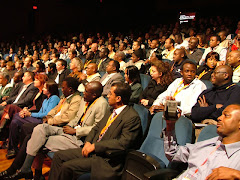
It was all a smile as members of the Heidelberg group gathered waiting for the President to come that morning of 8th July 2009 when a newly constructed production plant N0: 4 of the TPCC factory was inaugurated.

Mr. Daniel Gauthier, a member of the Board of Heidelberg who owns Twiga Cement Ltd giving his speech during the inauguration of the new plant at wazo hill.

Saturday, November 21, 2009

An economic investment zone project ready for lease in Dar

THE government of Tanzania in collaboration with the Export Processing Zones Authority (EPZA) is providing land for industrial use which is available for lease at a newly established project of Benjamin Mkapa Special Economic Zone (BWM-SEZ).
The park is located at Mabibo suburb in Ubungo along Nelson Mandela Expressway in the city of Dar es Salaam, its location is 12 kilometers away from Dar es Salaam port and 14 kilometers from Mwalimu Nyerere International Airport. The project which was initially established by the President’s Office, Economic planning, Privatization and Empowerment during the third phase government has currently been transferred to the Ministry of Trade, Industries and Marketing. This is a world class industrial park for export processing zones developed solely by the government of Tanzania under the strategy known as “The Tanzania Mini-Tiger Plan 2020” which is aimed at contributing to the acceleration of the growth of Tanzania’s Economy to between 8-10 percent GDP growth.


An aerial view of part of the BWM-SEZ at Mabibo suburb in Dar es Salaam. The most fascinating architectural design of the building is that shopping mall which has been designed with a curved structure on its façade.

The Mini-Tiger Plan 2020 is the strategy designed to build Special Economic Zones
needed to fast track the implementation of National Strategy for Growth and Reduction of Poverty popularly known as “MKUKUTA” with the aim to create between 2-3 million new jobs by year 2020. The government has already spent about Tshs. 36.5 billion towards the cost of construction of BWM-SEZ which is the largestin the country covering an area of about 259,400.49sqm. This is 52 hectares which is
equivalent to 125 acres of land. Report by EPZA shows that, out of Tshs. 35.6 billion, 31.7 billion being the cost of construction of civil works, buildings, drainage works,landscaping, electrical and telephone installation. Tsh. 4.8 billion has been spent under a separate contract for the design and construction of the 33KVA power sub-station. However, the total cost of the project is expected to reach about Tsh. 40 billion at completion.

An electricity sub-station is one of the major facilities which has been made available to cater for the need of electricity during power cuts within the BWM-SEZ. Other infrastructures such as roads and water drainage systems are all in good place.

Efforts are being undertaken by EPZA to hire large portion of this land to the prospective investors to run their businesses in light manufacturing and processing industries and labour intensive which would later earn the government with money. BWM-SEZ offers serviced land for lease and the plot sizes ranges from 300 sq meters to 11,000 sq meters. Each plot has connectivity points for water, electricity, gas, fire fighting system and sewerage system. The rental fee is 60 cents per sq meter per annum payable 10 years in advance, and the lease term is 33 years. According to the Director General of the EPZA, Dr. Adelhelm Meru, investors will also be required to pay a monthly service fee to cover for common services. In addition to the lease of serviced land, the BWM-SEZ welcomes investors who want to rent factory space. Construction of the factory sheds is at its final stage. The park also offers office space for lease to companies providing services to the park. Investors who succeed to be leased with plots within BWM-SEZ are expected to start construction of their industrial structures by end of 2009. It is expected that, in three years time (i.e by 2012) industries within BWM-SEZ will be full in operational.

This is a dispensary within BWM-SEZ, the building will be used for first aid medical treatment to workers of the factories within and not for out patient
Currently the construction work of buildings at the BWM-SEZ project site is completed and the main contractor is busy handing over some parts of the buildings to their client. The finished buildings are the administrative block which houses the main office of the Export Processing Zones Authority (EPZA). Other buildings are the dispensary to be used as a first aid clinic for workers inside the zone, a cafeteria, an impressive shopping arcade designed with an arch structure roof which would be used to sell manufacturing products within the zone, a fire station building and a customs house. The fire station would be installed with the special machines whose sense would detect fire within 25 radius kilometers, thus safety would be ensured at the zone from any possible dangerous fire occurrence within the zone. Apart from the buildings, the zone is equipped with the necessary infrastructure facilities These includes, a 33KVA power sub-station, a reliable gas distribution system connected to Songas pipelines, and a reliable sewerage disposals.

This is a fire building which is strategically designed with an open space on which to park fire vehicle.

There is underground network of electricity as well as telephone cables and water hydrant point in every plot. The electricity power station has been constructed in order to receive more power to feed the transformers which are to be installed later within the zone. The sewerage disposals would be pumped through a channel of storm water in a large ditch constructed close to the operating light industries within the zone, this would be later pumped outside to circulation point treatment or oxidation point Others are underground water reserve tank with a capacity of 4.5 million litters constructed with an underground depth of 9 meters deep designed to meet the water demand for 24 hours, a reliable fire fighting systems. Currently there are already finished supporting buildings for one stop service centre. This is after an intensive construction work of a land survey which was done by a team of architectural experts from the Dar es Salaam based Ardhi University which had also been supervising the work at the site for the last five years.

A structure made like mount Kilimanjaro monument at BWM-SEZ is an exciting landmark feature within the economic zone area. The feature has become an attraction to passersby who can view it clearly from outside the gate.

The initial construction phase started in August 2002 and ended up in 2005. The second phase continued and the main contractor, a locally registered class one construction company, Tanzania Building Works Ltd kept the construction at much faster pace in order to finish on the agreed date. BWM-SEZ is a landmark project whose construction lies on plot “No. 1081 Block B”. Among the most distinguishing feature which can be found within the project site is a structure made like mount Kilimanjaro monument which is a 9 meter high from the ground, stationed strategically few meters away from the main gate. The structure is architecturally designed on its top which is put the white stones at the peak to imitate the snow cap and the green robust ground cover to imitate the Kilimanjaro tundra, and high rise ground cover to imitate the intermediate trees.


The main gate is designed with a special covering material on top of the security building. This is a unique and a modern style building.

Right from the beginning the master plan of the project favoured the site as the most convenient one for the allocation of the SEZ project so as to attract local and international investors to enjoy the benefits and privileges of the SEZ, and Dar es Salaam being the main port of Tanzania, has good capacity to handle production from the SEZ. Its location in the suburb presents no problem to would be tenants because of its proximity to the local people and its conveniences it offers. “The construction is a good example of such a development an export economic processing zone needed for commercial purpose in semi-urban areas” Detailing from the architectural point of view, buildings at the BWM-SEZ project are decorated with high quality window glass fixed on steel aluminum products which have been supplied by Shamo Industries Ltd, a locally registered class one specialist contractor by CRB.

All buildings at the BWM-SEZ are decorated with alluco board, these are aluminium products used for decoration in buildings. It demonstrates high technology application by use of modern construction materials.

Aluminum and glazing are becoming an integral part in construction industry worldwide. The façade of each building at the site is decorated by using sheet glass which exhibits a more contemporary architectural design that provides an aesthetic beauty. The structured glazing looks darkish from outside and has been fixed on aluminum frames also supplied by Shamo Industries Ltd. Part of the external wall has been done by using a wall covering material called alluco board, this is a metal product joined with black fillers. The firm has laid down a success story in its endeavors of their manufacturing to international quality standards. The firm buys these materials from Italy and UK in order to meet the current demand of good product quality for aluminum and glass products of various colors and shapes. Other construction companies which took part in the project is Derm Electrical Company, a class one registered by CRB, specialized in Electricity and Air-conditioning systems. The firm did electrification work in every building within the zone.

The entire roads network within BWM-SEZ which have also been designed for pedestrians
Pedestrian walkways and spaces at the SEZ are designed to encourage walking through and around each Development Plot with basic principles that Provide separation between pedestrian and vehicle movements, and well defined separation of pedestrian paths from parking areas to building entrances. They also provide safe and convenient pedestrian walkways between buildings, paved areas and a free easy access for wheeled traffic, disabled and services to be according to relevant regulation in the use of ramps and proper dimensioning of access roads.EPZA is mandated to plan, develop and maintain an economic processing zones in some few selected areas in the country. The mission of the authority is to promote an adequate, safe and well maintained zone so as to effectively contribute to the social-economic development. In view of this, the authority is struggling to get areas of more economic zones and some areas have been earmarked for development such as Bagamoyo, Tanga, Arusha and Mtwara. The BWM-SEZ at Mabibo is the pilot project

Friday, November 13, 2009

Stigma and discrimination against HIV/AIDS victims still exists among the people

In Tanzania, like in any other country elsewhere in the world, there are well-documented cases of people with HIV/AIDS being stigmatized, discriminated against and sometimes denied access to services on the ground of their zero status. In spite of efforts to prevent the scourge, the persistent stigma and discrimination increase the impact of the epidemic on families and nations. The habit has long been condemned by various human rights organizations as an irresponsible act because it encourages, rather than prevent the spread of the scourge. This sort of discrimination is intensely personal and it takes many forms, such as families and communities may reject and ostracize those living or believed to be living with HIV/AIDS, or in-laws boycotting the widow of a son who has died from the disease and many other related examples. The stigma and discrimination associated with HIV/AIDS have many other effects in a society. To mention a few in particular, they have powerful, psychological consequences for how many people with HIV/AIDS come to see themselves, leading some cases to depression. Lack of HIV/AIDS awareness in societies is a prime cause which leads people to stigmatize and discriminate. Such acts are based on presumed or actual HIV-positive status and hence this is contrary to human rights. The HIV/AIDS related stigma and discrimination are triggered by many forces including lack of understanding of the disease, myths about how HIV is transmitted, prejudice, lack of treatment and irresponsible media on the reporting of the epidemic. All these contribute to the way people react towards the infected. People may lack education to understand that the spread through everyday contacts can be avoided by adoption of relatively simple precautions. There are many examples of initial efforts to eliminate these forms of stigma and discrimination and their success depends of people’s efforts. Stigma has ancient roots and it has been described as a quality that significantly discredits an individual in the eyes of others. It has also important consequences for the way in which individuals come to see themselves. Much HIV/AIDS related stigma builds upon and reinforces earlier negative thoughts. People with HIV/AIDS are often believed to have deserved what has happened to them, being thought doing something wrong in their lives. Often these wrong doings are linked to sex or to illegal and socially frowned activities, such as drug use, men who becomes infected bisexually or as having unsafe sexual intercourse with prostitutes on the streets. Women with HIV/AIDS are viewed often to perpetuate stigma and discrimination, partly through fear, partly through ignorance and partly because it is convenient to blame those who have been affected first. It is also necessary when analyzing the roots and results of stigma to demonstrate how different groups experience stigma and most particularly how men and women are differently affected by it. Stigma is linked to power and domination throughout societies as a whole. It plays a key role that ultimately creates social inequality. Stigma has its origins deep within the structure of society as a whole and in the norms and values that govern much of everyday life. Stigma and discrimination against AIDS sufferers causes some groups of people feel superior than others. For example. Long ideologies of gender inequality have resulted in women being blamed for the transmission of sexually transmitted diseases. HIV/AIDS related stigma often leads to a discriminative attitude, which is difficult to overcome and this, in turn leads to a disregard of the dignity of people living with HIV/AIDS virus, their families and even those who are thought of being infected. Beyond legal redress, there are many other ways of tackling HIV/AIDS related stigma. Public information campaigns as these have an important role to play in helping people understand the unfairness and injustice of discrimination. The campaigns can change individual and social attitudes, participatory education can help individuals place themselves to respect those who suffer discrimination and thereby appreciate the injustices of discriminatory actions.

Children affected with HIV/AIDS disease are still being discriminated in our societies.

Though grass-root activism, advocacy and involvement in development and implementation policy, actions of people living with and affected by HIV/AIDS can be radical force for change, breaking down the barriers to the full realization of human rights. In Tanzania here, one important observation is that most of these reported cases involve people living in urban areas, who can at least afford to access hospital treatment. But people in rural areas have a disadvantage for this, for reasons ranging from ignorance where there is still a belief that those suffering from HIV/AIDS disease have been bewitched. According to Tanzania Commission for AIDS (TACAIDS), the infection rate was rising in the country due to increased cases of stigma and discrimination associated with HIV/AIDS. According to the commission, people fear to go to the voluntary test because once they knew that they are infected, they would be automatically stigmatized by some of their friends, neighbors and even their family members. However, an AIDS activist in the country Miss Flora Njunwa suggest that, a law to penalize those who are fond of stigmatizing the infected individuals in the country should be enacted, noting that this state of affair has instilled fear to undergo tests to determine people’s health status. As tools for tackling HIV/AIDS related stigma and discrimination , policy and legal reform stakeholders have a limited impact unless supported by the values and expectations of a society as a whole. Documented efforts to challenge HIV/AIDS related stigma and discrimination remains relatively rare. Research work is urgently needed to identify the least effective ways of tackling stigma and discrimination across a range of contexts. With respect to measures to counter discrimination, a more programmatic approach has frequently been adopted. This has involved a variety of actors coming together to counter the negative consequences of HIV/AIDS related stigma as it impacts upon lives and communities. Too often in the past, understanding was linked to a model of enlightment in which those who know best intervene to redress negative mentalities and attitudes. This approach regard those who are being educated as instrumental to empowering communities through participatory processes that unleash their knowledge and experiences. The success approach in this needs a long-term advocacy for social change in response to HIV/AIDFS related stigmatization and discrimination. The role of people with HIV/AIDS and of religious and political leaders in the country as regards such a process cannot be underestimated. Comprehensive care and services, including voluntary counseling and testing and care are available to enable individuals to learn their status and enable them to share their status with other family members. A legal protection for people living with HIV/AIDS is a powerful way of redressing and thereby mitigating the unequal power relations, the social inequality and the exclusion that lie beneath HIV/AIDS related stigmatization and discrimination. Action is needed to tackle gender, racial and sexual inequalities and stereotypes upon which HIV/AIDS related stigmatization and discrimination.

Internet: the magic of communication for business and economic solution

WHEN web surfing was introduced to the rest of the world in early 1998 to compete head on with new and old media, little did the world know that Information and Communication Technology (ICT) was going to transform economies of scale for small and medium size business enterprises. Internet, being one of the fast growing and the leading tool of the ICT in today’s era of Science and technology is more useful for the purpose of speeding up business and economic development of nations. With the use of the internet facility for business and economic transactions, the pace of globalization has been accelerated and many governments have made significant progresses to achieve their targets. The progresses made so far is as a result of deploying ICT in both e-government and e-governance solutions in a category whereby several departments from various government ministries are transforming their business operations quickly. Internet is an enabler for people, the business community and civil society to communicate at no cost or at low cost. It has prompted a change of development in a global sphere of thinking as it is a feeder of information transfer. Various arms of governments in the world including Tanzania use ICT to promote their tourism market, especially by small operators who specialize in eco-tourism and adventure tourism. The tool has also revolutionized education, governance, manufacturing, medicine, communication and Transport in entirely. With the emergence of the globalization, business operators are under constant pressure for reforms and ICT has been a driving force allowing their capital to move quicker. The most surprising thing to note is that, ICT by not recognizing borders is encouraging everyone to engage in the process. According to the Tanzania Defense of Human Rights and Citizen Rights protections, investments in ICTs have grown substantially and there is a general agreement that increased ICT production and usage and this has contributed a lot to the economic growth of the country. ICTs are tools that help to transfer knowledge and information quickly and comprises the manufacturing and service industries that capture, transmit and display data and information electronically. The manufactured products include office, accounting and computing machinery and other electronic components such as computer peripheral equipment and software, wholesaling of electronic and Tele-communication parts. In recent years, internet being one of the powerful ICT tool has transformed the performance of the global banking business transactions. With new technological set ups, most Banks have been automating their services in order to cater for the increase in demand for quick, efficient and cost effective practices. Tanzania which in the past was conducting a socialist type of economy before it allowed trade liberalization policy in 1985, has entered in international investment forum that culminated in the mushrooming of banking institutions in the country. Now with the proliferation of banking institutions in the country, follows business competition which is exacerbated by the emerging technologies. To cope with the situation internet as the main driving force is extensively used for innovative work. With the use of internet, there are some advancements which have drastically taken place in terms of business transactions, these are such as online payments, hotel reservations, online job adverts, flight e-bookings and many others.

People at the local internet cafe, internet communication has of late become the easiest and useful communication tool for economic and social develoment.

“ICT in general is important in foreign earnings, business support as well as e-commerce, tourism, marketing of domestic products, improved social services and strengthening international relationship”, says the Principal Researcher with the Tanzania Industrial Research and Development Organization (TIRDO) Dr. George .S. Oreku who was recently quoted as saying by this paper. According to him, if ICT is properly utilized and worked out in many development programs it can make improvements and wider technological skills for every sector of the national economy. Transferring money using the services of cell-phone network operators is increasingly becoming a common phenomenon among the more than 14 million Tanzanians who currently have access to mobile telephony. Cellular network money transfer were pioneered in East Africa by the Kenya based company in 2007, coining the code M-Pesa for the service and that code was later adopted by Vodacom Tanzania Limited. The system is among the easiest ways of sending money within the country whether one has a bank account or not. One can also pay for the goods and services purchased by one using the system. In Sept 2006, it can be remembered that “The Citibank Tanzania Ltd” introduced an online funds transfer. This online banking services dubbed “City Direct” enables their customers in the country to transfer money electronically at the click of a computer mouse. This is an innovative way that see to its customers the transfer of funds online to beneficiary accounts held at other commercial banks in the country. The services relieves the customers of the necessity of using paper cheques and eliminates the need to visit the bank for transaction services. Information Technology experts relates the service as the magic of online communication that is efficient and ensures safety of transactions. Through this online connection, Citibank customers are able to initiate various types of payments including salaries, supplier payments taxes and dividends from their offices efficiently and in a secured manner. Another bank with the same services is the Tanzania Postal Bank. Banking sector has gone so far in the use of ICT and their applications for business transactions. The banks have also expounded this technology particularly in e-documentations and Automated Teller Machines (ATMs) According to the Director of ICT in the Ministry of Communications, Science and Technology Dr. Zaipuna Yona, once there is proper utilization of ICT in government offices, then there could be no fall-in for passports in Immigration offices in the country or flocking of customers at the Tanzania Revenue Authority (TRA) offices. Although ICT services has expounded largely in towns and in cities where most business activities takes place, farmers in rural areas suffers the most as they do not have direct access because of a number of factors. The basic one being lack of a reliable infrastructure as well as electricity in those areas. Forget about the provision of the ISP for the internet that might become impossible owing to the location of an area. In Tanzania, the recent introduction of a mobile internet access product by a cellular phone company, Zain Tanzania, aimed at assisting its subscribers surf quickly and easily in rural areas. According to Zain Tanzania, the service that employs GRPS/EDGE technology enables data connections significantly faster than dial-up and traditional GSM systems. This is a wireless service facility that enables one to download voice, data and images faster in computers. The technology keeps one connected to his/her laptop computer while on travels in Zain coverage areas in the country. The access usually provides subscribers with pre-paid and post paid customer care services and the freedom to stay connected. People owning laptops buys personal computer internet cards (PCI Card) with which they can access the internet and get connection with corporate networks, send business applications and workforce management systems. With such developing concept of a modern communication technology that employs the use of internet, Zain Tanzania Ltd makes use of its widest coverage in the region to help stimulate convenient business interaction at an affordable price. Under the operation, internet café businesses in rural areas are a common place.