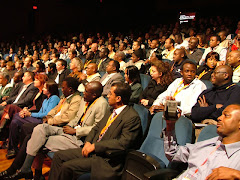
JOURNALISTS Environmental Association of Tanzania (JET) has underscored the need for Tanzanian journalists to put quality reporting on environmental issues especially focusing on forests, wildlife, fisheries and minerals. According to JET officials, journalists need to equip themselves with knowledge on how best they can report environmental issues, the call has come when many journalists lack skills and knowledge on reporting environmental issues. According to JET, there are so many environmental issues which could have been addressed by journalists so that communities can change their perception, be it forest, wildlife, fisheries and others, but because of inadequately information on environment, journalists have failed to reach out to many people to change their mindset on environment. Apart from journalists equipping themselves with environmental knowledge, they actually need to understand policies to ensure that the public follow them though it takes time for public to change their mindset on environmental issues, the media should not tire in addressing these issues as things change with time. Of late, there has been a great impact, especially in Morogoro region, as at first people in the area were reluctant to change on how they were cutting down trees and how to utilize water from the streams. With time, they have realized how vital it is to have on environmental friendly area. ”There is a tremendous change in the area as people have engaged themselves in agro-forestry and know the importance of planting more trees. People also utilize their streams for irrigation.
Briefing journalists recently on forestry, Senior Legal Officer and Researcher for Lawyers Environmental Action Team (LEAT) Mr. Emmanuel Massawe said there is need to ensure sustainable supply of forest products and services while maintaining sufficient forest area under effective management. Through sustainable forest based industrial development and trade, there is increased employment and foreign exchange earnings, hence the need for journalists to raise public awareness on the importance of forests to both the people and the government. According to him, there are a number of issues that are affecting forestry in the country like inadequate awareness of tree growing, sustainable forest management and lack of financial incentives. Tree harvesting exceeds tree plantations by threefold. This is so pathetic, lamented Massawe.
Wednesday, March 18, 2009

Make possible and viable power technology in Tanzania
THE use of power technology has a great significance in the development of human resource energy activities. The term “Power Technology” includes all sorts of energy power generation including Hydro-electric power technology. Their application have a great significance to the development of a country’s economic and social activities. One must have in mind the mechanical power generation and any other types of energy giving mechanisms in this aspect. But samples are quite interesting to note as well as the information data available as in the energy sector in Tanzania. Not many people know that only 10 percent of the Tanzanian population has access to power technology components e.g electricity, and the natural gas. The main energy consuming sector is the household and more than 76 percent of this power technology is used in urban centers and little is supplied in rural vicinity. Other power energy giving technologies are such wood materials like firewood which are consumed in great volumes in rural areas. In Tanzania for example, about 40 million tones of firewood and about 750,000 tones of charcoal are consumed each year. Another characteristic compounded by power technology is the Solar Energy which is both accessible and affordable but under certain conditions. By definition, solar power is obtained through harnessing the radiant energy that is emitted by the sun when it shines. This can be done via solar battery, panel or photo-voltaic cells that are designed to convert sunlight into electrical energy which is then used as a source of power. Experts in the world over have the best things today about power technology in relation to solar system. What is standing between it and the use of this power on a very much wider scale than is the case in this solar technology under the sun. The country is awash with sunshine practically all the year around. And the sunshine is not only cheap and readily available. The solar power generating equipment does not come cheap enough for the majority of Tanzanians to readily afford. Not much is being done to sell the idea and the related services to potential consumers most of whom are in rural Tanzania. The used of power technology with which to run various economic and social developments in Tanzania is not only possible and viable, but it is also more than desirable and necessary at this stage in the history of the country’s developments. Experts say that given certain conditions, more power technologies are by easily affordable, accessible, sustainable and has returns that are in the long run justified.
Apparently, one major setback is the initial cost of setting up the necessary power technology equipment including back-up batteries. This is where the Tanzanian government analysts say, can chip in with the necessary legislation to cut down or better still completely abolish duties and taxes on equipments used for power technologies and related appurtenances. Coupled with massive awareness campaigns on the advantages of using power technology equipments such as solar power, electricity, batteries, natural gas and energy sources could go along way to attaining faster socio-economic development.
These power technologies would also save environment from further destruction through the on-going excessive use of wood fuel and pollutant emissions especially in rural Tanzania as well as in urban centers. Actually by conducting power technologies skills, this is cost effective environmentally and financially. For one thing, it saves excessive use of foreign exchange whereby a country has to use its natural resources.
Apparently, one major setback is the initial cost of setting up the necessary power technology equipment including back-up batteries. This is where the Tanzanian government analysts say, can chip in with the necessary legislation to cut down or better still completely abolish duties and taxes on equipments used for power technologies and related appurtenances. Coupled with massive awareness campaigns on the advantages of using power technology equipments such as solar power, electricity, batteries, natural gas and energy sources could go along way to attaining faster socio-economic development.
These power technologies would also save environment from further destruction through the on-going excessive use of wood fuel and pollutant emissions especially in rural Tanzania as well as in urban centers. Actually by conducting power technologies skills, this is cost effective environmentally and financially. For one thing, it saves excessive use of foreign exchange whereby a country has to use its natural resources.
Saturday, March 7, 2009
TOWARDS IMPROVEMENT OF WATER CRISIS IN TANZANIA:
STAKEHOLDERS of the water industry in the country have been experiencing many challenges and hardships towards the development of the water sector, the result of which have not been providing solutions to a better achievement. One doubtful report is whether Tanzanian water sector strategies will be able to meet the Millennium Development Goals (MDGs). The strategies aims to ensure an effective supply of a clean and safe water to its people as endorsed in the Water Ministry’s program of decade for action 2005-2015. As the saying goes, the issue of water scarcity in the country has been the order of the day. It’s water, water, water everywhere as from the household taps to rural family homes. But if one may ask to find out where has all the water gone? Stakeholders including government authorities and the individual concerned, remains dumb or even turns a blind eye and eventually no solutions to the problem. Women and their children including men almost in all areas prone to water scarcity in the country search for water everyday in virtually all cities, towns and even in rural vicinity. They have to walk long distances in search of this precious commodity but to no avail. The chronic water shortage in many areas is causing a serious concern to all and sundry. Study shows that, the main problems in rural communities are long treks that culminates walking long distances of about 2 to 3 kilometers daily in search of water from public tap carrying heavy containers on their heads of about 20 to 25 litres per trips.

Will the Ministry of water development be able to meet the MDGs?
A woman is drawing water from a hand pumping machine in a rural village in Tanzania.
Long queues at the point of water taps is also another problem and this situation stagnates other economic activities. Should there be contamination at these common points the whole village is likely at risk. From time immemorial, this old adage of water everywhere but not a drop to drink continues to stare at the faces of Tanzanians now for the last 47 years after independence. Moreover, the debate rages on as whether water scarcity is due to lack of resources, human capacity or bureaucracy. In Dar es Salaam city for example, despite of its 4 million population of the people, the story remains the same for the better part of the independent years. Half of its suburbs which depends on water sources from Ruvu Juu are sometimes faced by water crisis. A resident of Ilala suburb in the city, Sheik Mzee Ramadhani Hamisi, blames the government and local authority ministry of giving city dwellers a raw deal despite payment to the authorities and taxes to the government for the improvement of water infrastructures. He says, it was hard for the government to justify taxation to the city dwellers while they are exposed to all sorts of diseases associated with lack of adequate water in their household surroundings. However, a high ranking official from the Dar es Salaam Water & Sewerage Corporation (DAWASCO) was quoted recently as saying that, “the big city of Dar es Salaam would continue experiencing water shortage due to poor underground infrastructural facilities e.g old water pipes which seems to have been outdated and needs urgent replacement.
The Chief Executive Officer, Mr. Alex Kaaya said that chances of having reliable water supply within the city are very minimal at the moment citing on the failure of short rains which have led to the sharp drop of water level from the main source of water supply in Kizinga and Ruvu rivers. According to him, in order to avert the situation his organization is currently working out plans to rehabilitate several boreholes in the city in case the condition got worse. But careful observers have noted that most of these wells might not work to satisfy people’s needs as most of them are empowered by electricity whose supply in the city is unreliable. This is yet another scenario caused owing to frequent power blackouts culminating from water shortage from its generating sources.

A woman is drawing water from a man made water well. African continent, south of Sahara desert is faced with acute shortage of clean water
Water blues to some extent might be caused by insufficient water rainfall. Apart from boreholes and other drilling water wells, dry spell is rigorously a cause of inadequate water supply, says an anonymous water engineer in the ministry of water development.
Water is a fundamental natural resource for social economic development. Since the Millennium summit’s declaration of the Millennium Development Goals (MDGs) in 2000 as an agenda for reducing poverty and improving lives of the people in the world, Tanzania has been spearheading various strategic actions for achieving these targets but unfortunately they have proved futile. Because of the growth of world population and other factors, the availability of drinking water per capita is shrinking. The issue of water shortage can be solved through more production, better distribution and less waste of it.
Experts predicts more trouble ahead because of the world’s growing population, increasing contamination through pollution, and global warming. While the world's population tripled in the 20th century, the use of renewable water resources has grown six-fold. Statistics shows that within the next fifty years, the world population will increase by another 40 to 50 %. This population growth coupled with industrialization and urbanization will result in an increasing demand for water and will have serious consequences on the environment. Despite the fact that Tanzania is endowed with second fresh water Lake in the world, the country’s urban centers in Lake Victoria Basin are the hardest hit by water scarcity. As a result water borne diseases besides malaria has remained health issues all year around.

Women drawing water from the well in African rural village. The problem of safe water is still a great problem to most people living in African rural areas. (Photo by courtesy of west Africa based Panos media organisation)
Such urban centers are like Musoma, Bukoba and Mwanza city, and the same story extends to the neighboring towns of Homa-Bay, Kisumu and Mbita, and Entebbe, Jinja and Kampala city in the neighboring countries of Kenya and Uganda respectively. All these towns are connected by the Lake Victoria Regional Local Authorities Cooperation (LAVRLAC) and a joint cooperation is underway through the initiative by the Swedish International Development Agency (SIDA) to bring sustainable use of water resources in these towns and cities. However, the Provincial Director of Environment of the lake region, Mr. Maurice Otieno, says a sanitation condition in these towns and cities is actually appalling due to discharge of raw sewerage that has polluted the lake. According to him, this has made the lake water to be unfit for human consumption in most cases.
During the decade of action to be implemented by the fourth phase government under the philosophy of new vigor for the betterment of people’s life, Tanzania will implement prudent strategic actions that will excel progress in achieving the MDGs on water and sanitation. To meet these objectives President Jakaya Kikwete had directed the ministry of Water development to come up with special programs to facilitate water availability instead of investing in improving the infrastructure as stipulated in the 2005 CCM election manifesto. The President urged the concerned Ministry to campaign vigorously against environmental degradation because it is to blame for the current water crisis in the country. Under the Ministry’s Medium Term Strategic Plan (MTSP) targets of improving the provision of water services countrywide, this aims at ensuring people to get an easy access to this precious commodity just within the perimeters of 400 meters away from the main water pipes by 2015. The general thrust of the water sector is to ensure that all men, women and children are able to access clean, affordable safe water and sanitation. The operational targets are increasing the population with access to clean and safe water from the current 53 percent to 90 percent by 2015.

Will the Ministry of water development be able to meet the MDGs?
A woman is drawing water from a hand pumping machine in a rural village in Tanzania.
Long queues at the point of water taps is also another problem and this situation stagnates other economic activities. Should there be contamination at these common points the whole village is likely at risk. From time immemorial, this old adage of water everywhere but not a drop to drink continues to stare at the faces of Tanzanians now for the last 47 years after independence. Moreover, the debate rages on as whether water scarcity is due to lack of resources, human capacity or bureaucracy. In Dar es Salaam city for example, despite of its 4 million population of the people, the story remains the same for the better part of the independent years. Half of its suburbs which depends on water sources from Ruvu Juu are sometimes faced by water crisis. A resident of Ilala suburb in the city, Sheik Mzee Ramadhani Hamisi, blames the government and local authority ministry of giving city dwellers a raw deal despite payment to the authorities and taxes to the government for the improvement of water infrastructures. He says, it was hard for the government to justify taxation to the city dwellers while they are exposed to all sorts of diseases associated with lack of adequate water in their household surroundings. However, a high ranking official from the Dar es Salaam Water & Sewerage Corporation (DAWASCO) was quoted recently as saying that, “the big city of Dar es Salaam would continue experiencing water shortage due to poor underground infrastructural facilities e.g old water pipes which seems to have been outdated and needs urgent replacement.
The Chief Executive Officer, Mr. Alex Kaaya said that chances of having reliable water supply within the city are very minimal at the moment citing on the failure of short rains which have led to the sharp drop of water level from the main source of water supply in Kizinga and Ruvu rivers. According to him, in order to avert the situation his organization is currently working out plans to rehabilitate several boreholes in the city in case the condition got worse. But careful observers have noted that most of these wells might not work to satisfy people’s needs as most of them are empowered by electricity whose supply in the city is unreliable. This is yet another scenario caused owing to frequent power blackouts culminating from water shortage from its generating sources.

A woman is drawing water from a man made water well. African continent, south of Sahara desert is faced with acute shortage of clean water
Water blues to some extent might be caused by insufficient water rainfall. Apart from boreholes and other drilling water wells, dry spell is rigorously a cause of inadequate water supply, says an anonymous water engineer in the ministry of water development.
Water is a fundamental natural resource for social economic development. Since the Millennium summit’s declaration of the Millennium Development Goals (MDGs) in 2000 as an agenda for reducing poverty and improving lives of the people in the world, Tanzania has been spearheading various strategic actions for achieving these targets but unfortunately they have proved futile. Because of the growth of world population and other factors, the availability of drinking water per capita is shrinking. The issue of water shortage can be solved through more production, better distribution and less waste of it.
Experts predicts more trouble ahead because of the world’s growing population, increasing contamination through pollution, and global warming. While the world's population tripled in the 20th century, the use of renewable water resources has grown six-fold. Statistics shows that within the next fifty years, the world population will increase by another 40 to 50 %. This population growth coupled with industrialization and urbanization will result in an increasing demand for water and will have serious consequences on the environment. Despite the fact that Tanzania is endowed with second fresh water Lake in the world, the country’s urban centers in Lake Victoria Basin are the hardest hit by water scarcity. As a result water borne diseases besides malaria has remained health issues all year around.

Women drawing water from the well in African rural village. The problem of safe water is still a great problem to most people living in African rural areas. (Photo by courtesy of west Africa based Panos media organisation)
Such urban centers are like Musoma, Bukoba and Mwanza city, and the same story extends to the neighboring towns of Homa-Bay, Kisumu and Mbita, and Entebbe, Jinja and Kampala city in the neighboring countries of Kenya and Uganda respectively. All these towns are connected by the Lake Victoria Regional Local Authorities Cooperation (LAVRLAC) and a joint cooperation is underway through the initiative by the Swedish International Development Agency (SIDA) to bring sustainable use of water resources in these towns and cities. However, the Provincial Director of Environment of the lake region, Mr. Maurice Otieno, says a sanitation condition in these towns and cities is actually appalling due to discharge of raw sewerage that has polluted the lake. According to him, this has made the lake water to be unfit for human consumption in most cases.
During the decade of action to be implemented by the fourth phase government under the philosophy of new vigor for the betterment of people’s life, Tanzania will implement prudent strategic actions that will excel progress in achieving the MDGs on water and sanitation. To meet these objectives President Jakaya Kikwete had directed the ministry of Water development to come up with special programs to facilitate water availability instead of investing in improving the infrastructure as stipulated in the 2005 CCM election manifesto. The President urged the concerned Ministry to campaign vigorously against environmental degradation because it is to blame for the current water crisis in the country. Under the Ministry’s Medium Term Strategic Plan (MTSP) targets of improving the provision of water services countrywide, this aims at ensuring people to get an easy access to this precious commodity just within the perimeters of 400 meters away from the main water pipes by 2015. The general thrust of the water sector is to ensure that all men, women and children are able to access clean, affordable safe water and sanitation. The operational targets are increasing the population with access to clean and safe water from the current 53 percent to 90 percent by 2015.
How cement industry contributes to Tanzania’s national economy
IT is undisputed factor that the cement industry sector contributes to the development of the important infrastructural facilities needed to speed up economic development of any country in the world, Tanzania included. Cement product is more useful to enable the construction go on. Cement in its raw form technically has no ability, but it is the key ingredient for making concrete as well as the foundation of any construction purposes. Concrete is used more than any other man-made material and is second only to water as the most used consumer good, not only in construction but in all walks of human life.
For the Tanzanian economy to grow, IT needs infrastructure development through the construction of major means of transport such as roads, bridges, railways as well as main telecommunication network towers. All these infrastructural development requires cement product. Other important features are such things like residential properties, commercial buildings, hospitals, fibre optic cables, service centres etc. are also important for national development. In 2007, Tanzanian industrial production comprising of construction and manufacturing grew by 9.2 percent compared with 8.5 percent in 2006. Whereas in 2007, the construction industry contributed 7.9 percent to the country’s Gross Domestic Product (GDP), this is an increase of over 2 percent compared with 5.8 percent in 2006.

A Quarry material is the main cement raw material whose component constitutes 70 percent of cement product. Normally this is excavated from a nearby cement plant
The continued growth in the industry corresponds with the increased cement demand and production in the country. The industry estimates that 90 percent of cement consumption is used for residential purposes, the majority of which is for the construction of new buildings. Tanzania consumes an average of 42 kilos per capita per year of the cement production in the country. These statistics serve as an indicator of the economic activity in the country which indicates a substantial room for growth. According to the latest cement industry report, the usage of cement product in the country, has increased substantially as the demand of the product is high. Cement manufacturers have seen the need to increase their production level to meet the national demand as the product is the cornerstone of the construction industry as a whole.
The volume of cement required in construction are substantial. On average, the construction of a family home requires 14 tones of cement, whereas a kilometer of road contains as much as 2,500 tons of cement. In 2007, the total amount of income generated in the Tanzanian economy by the cement industry is Tsh 199 billion, Tsh. 90 billion of which went directly or indirectly to the government. Comparing the total benefits generated for the stakeholders to the total revenues generated, the government made 1.5 times the amount of money from the sale of a bag of cement than the stakeholders of the companies did themselves. In the Tanzanian cement industry, the majority of the production is contained in the 50kg bags of cement. This cement is used either for making blocks or concrete which are then used for a variety of purposes that includes the following. Residential buildings, commercial offices, manufacturing and mining facilities, roads and bridges, water and sewerage treatment facilities, harbours and reservoirs. Infrastructure made with cement has a number of benefits such as newly constructed roads and those which are under repair which allow for reduced travel time. Residential structures built with cement products have a longer lifespan for they provide more security and more soundproof and fireproof and have better temperature control than homes built with other products. Buildings made of concrete need less energy for heating and cooling than those made of other materials. Cement is an excellent insulator and concrete buildings remain cooler in the heat and warmer in the cold.

Construction workers in a newly constructed cement plant at Wazo Hill on the outskirts of Dar es Salaam city. A multi-billion plant factory is owned by Tanzania Portland Cement Company, the largest in the country.
Under corporate social investments, the cement industry is committed to sustainable development in Tanzania and plays the leading role in contributing to health, education, environment and community development programs. In 2007 alone, the industry spent Tsh. 436 million on such programs and initiatives. Highlights of the recently funded programs includes education which involves the construction and renovating classrooms in various parts of the country. Under the education sector, the cement companies has extensively rehabilitated schools, and provided them with the necessary facilities such as water management and sewage systems, toilets, desks and teachers’ tables. They have also provided founding sensitization training to school on HIV and malaria issues.
Under community development issues, the cement companies supports existing NGOs and organizations such as a community development programme which deals with orphanage and youth counseling centers in both Tanzania Mainland and Tanzania Isles.
The companies support NGOs that address HIV/AIDS and cancer problems, thus donating food and other basic needy products to orphans in the city of Dar es Salaam. In addition to that, these companies engage in water supply wherever there is scarcity and this is supplied free of charge to villages neighboring the integrated cement factories. Human capital investment has a large multiplier effect where skills shortages and inadequate capacity constrain the development of industries. Tanzanian cement industry supports human capital development through training and development. All cement companies provide training to employees both on and off site and most of their training is related to production, technology and maintenance, but other examples of training include issues pertaining to labour laws, civil engineering, quality control and information technology. Language courses for English and Kiswahili are also offered because all three cement companies are subsidiaries of larger international corporations, they take full advantage of the training centres and courses offered worldwide.

Cement bags in final stage of transportation at the habour.
The three companies sends employees abroad for training on secondment programs. In 2007 alone, the industry spent over Tsh. 575 millions on training programmes benefiting almost every employee. According to statistics made available, in all three companies 98 percent of the employees are local. The industry provides extensive safety, training and equipment to their employees. Each company does provide full medical services to all employees, including on site clinics and ambulances. The industry has a number of safety and hazard standards in place to protect its employees. Tackling HIV/AIDS has become a major responsibility for the industry by offering counseling programs, free ARV treatments to employees and free voluntary HIV testing. The industry has peer educators who hold weekly meetings to provide training and support to employees and their families. The industry has taken additional measures that shows its investments in employees’ well-being. They provide fully subsidized transport to from work as well as canteen facilities to all employees. They provide housing, education allowances and medical treatment for employees and their dependants. Tanzania has three major cement manufacturing companies who are also members of East African Cement Producers Association (EACPA). The association incorporates all eight giant cement companies which currently operates in East Africa region. The role of association is to coordinate among its members the exchange of information pertaining to cement technology, environment and product standards to enhance the competitiveness of the cement sector within East African Community market. The EACPA-Tanzania chapter is composed of three independent and competing companies, these are Tanzania Portland Cement Company Ltd (TPCC) also known as Twiga cement. The company was established in 1966 and its major stakeholders is HeidelBerg Cement and its quarry factory offices are located in Wazo Hill area on the outskirts of Dar es Salaam city. The firm is publicly listed on Dar es Salaam Stock Exchange. Tanga Cement, also known as Simba Cement, opened its factory in 1980 in Pongwe are in Tanga municipality. Holcim Mauritius Investments Holding is the major stakeholder and the company is listed on the Dar es Salaam Stock Exchange. The third cement company is Mbeya Cement company Ltd, this is a member of the Lafarge group and opened in 1983 in Songwe, South of Mbeya town. The company is currently not publicly listed.
For the Tanzanian economy to grow, IT needs infrastructure development through the construction of major means of transport such as roads, bridges, railways as well as main telecommunication network towers. All these infrastructural development requires cement product. Other important features are such things like residential properties, commercial buildings, hospitals, fibre optic cables, service centres etc. are also important for national development. In 2007, Tanzanian industrial production comprising of construction and manufacturing grew by 9.2 percent compared with 8.5 percent in 2006. Whereas in 2007, the construction industry contributed 7.9 percent to the country’s Gross Domestic Product (GDP), this is an increase of over 2 percent compared with 5.8 percent in 2006.

A Quarry material is the main cement raw material whose component constitutes 70 percent of cement product. Normally this is excavated from a nearby cement plant
The continued growth in the industry corresponds with the increased cement demand and production in the country. The industry estimates that 90 percent of cement consumption is used for residential purposes, the majority of which is for the construction of new buildings. Tanzania consumes an average of 42 kilos per capita per year of the cement production in the country. These statistics serve as an indicator of the economic activity in the country which indicates a substantial room for growth. According to the latest cement industry report, the usage of cement product in the country, has increased substantially as the demand of the product is high. Cement manufacturers have seen the need to increase their production level to meet the national demand as the product is the cornerstone of the construction industry as a whole.
The volume of cement required in construction are substantial. On average, the construction of a family home requires 14 tones of cement, whereas a kilometer of road contains as much as 2,500 tons of cement. In 2007, the total amount of income generated in the Tanzanian economy by the cement industry is Tsh 199 billion, Tsh. 90 billion of which went directly or indirectly to the government. Comparing the total benefits generated for the stakeholders to the total revenues generated, the government made 1.5 times the amount of money from the sale of a bag of cement than the stakeholders of the companies did themselves. In the Tanzanian cement industry, the majority of the production is contained in the 50kg bags of cement. This cement is used either for making blocks or concrete which are then used for a variety of purposes that includes the following. Residential buildings, commercial offices, manufacturing and mining facilities, roads and bridges, water and sewerage treatment facilities, harbours and reservoirs. Infrastructure made with cement has a number of benefits such as newly constructed roads and those which are under repair which allow for reduced travel time. Residential structures built with cement products have a longer lifespan for they provide more security and more soundproof and fireproof and have better temperature control than homes built with other products. Buildings made of concrete need less energy for heating and cooling than those made of other materials. Cement is an excellent insulator and concrete buildings remain cooler in the heat and warmer in the cold.

Construction workers in a newly constructed cement plant at Wazo Hill on the outskirts of Dar es Salaam city. A multi-billion plant factory is owned by Tanzania Portland Cement Company, the largest in the country.
Under corporate social investments, the cement industry is committed to sustainable development in Tanzania and plays the leading role in contributing to health, education, environment and community development programs. In 2007 alone, the industry spent Tsh. 436 million on such programs and initiatives. Highlights of the recently funded programs includes education which involves the construction and renovating classrooms in various parts of the country. Under the education sector, the cement companies has extensively rehabilitated schools, and provided them with the necessary facilities such as water management and sewage systems, toilets, desks and teachers’ tables. They have also provided founding sensitization training to school on HIV and malaria issues.
Under community development issues, the cement companies supports existing NGOs and organizations such as a community development programme which deals with orphanage and youth counseling centers in both Tanzania Mainland and Tanzania Isles.
The companies support NGOs that address HIV/AIDS and cancer problems, thus donating food and other basic needy products to orphans in the city of Dar es Salaam. In addition to that, these companies engage in water supply wherever there is scarcity and this is supplied free of charge to villages neighboring the integrated cement factories. Human capital investment has a large multiplier effect where skills shortages and inadequate capacity constrain the development of industries. Tanzanian cement industry supports human capital development through training and development. All cement companies provide training to employees both on and off site and most of their training is related to production, technology and maintenance, but other examples of training include issues pertaining to labour laws, civil engineering, quality control and information technology. Language courses for English and Kiswahili are also offered because all three cement companies are subsidiaries of larger international corporations, they take full advantage of the training centres and courses offered worldwide.

Cement bags in final stage of transportation at the habour.
The three companies sends employees abroad for training on secondment programs. In 2007 alone, the industry spent over Tsh. 575 millions on training programmes benefiting almost every employee. According to statistics made available, in all three companies 98 percent of the employees are local. The industry provides extensive safety, training and equipment to their employees. Each company does provide full medical services to all employees, including on site clinics and ambulances. The industry has a number of safety and hazard standards in place to protect its employees. Tackling HIV/AIDS has become a major responsibility for the industry by offering counseling programs, free ARV treatments to employees and free voluntary HIV testing. The industry has peer educators who hold weekly meetings to provide training and support to employees and their families. The industry has taken additional measures that shows its investments in employees’ well-being. They provide fully subsidized transport to from work as well as canteen facilities to all employees. They provide housing, education allowances and medical treatment for employees and their dependants. Tanzania has three major cement manufacturing companies who are also members of East African Cement Producers Association (EACPA). The association incorporates all eight giant cement companies which currently operates in East Africa region. The role of association is to coordinate among its members the exchange of information pertaining to cement technology, environment and product standards to enhance the competitiveness of the cement sector within East African Community market. The EACPA-Tanzania chapter is composed of three independent and competing companies, these are Tanzania Portland Cement Company Ltd (TPCC) also known as Twiga cement. The company was established in 1966 and its major stakeholders is HeidelBerg Cement and its quarry factory offices are located in Wazo Hill area on the outskirts of Dar es Salaam city. The firm is publicly listed on Dar es Salaam Stock Exchange. Tanga Cement, also known as Simba Cement, opened its factory in 1980 in Pongwe are in Tanga municipality. Holcim Mauritius Investments Holding is the major stakeholder and the company is listed on the Dar es Salaam Stock Exchange. The third cement company is Mbeya Cement company Ltd, this is a member of the Lafarge group and opened in 1983 in Songwe, South of Mbeya town. The company is currently not publicly listed.
Wednesday, February 25, 2009
Mzumbe University to organize ICT training on fraud prevention for police force
MZUMBE University (Dar es Salaam Business School) has or4ganized a five day computer related crimes and frauds course for police force in the country. According rto the course coordinator, Dr. Kenneduy Mkutu, over 50 participants including law enforcement officers, bankers, insurance agencies, customs, revenues authorities, security officers from targeted areas like airports, harbours, power plants, banks and telecommunication firms will attend. The course would give an understanding of the types of Information and Communication Technology (ICT) related crimes that take place in day’s life and how to prepare or prevent them. According to him, the participants will be exposed to ICT computer networks, the use of ICT in everyday life, internet and email cyber crimes, computers and frauds, computer crimes investigation, computer forensics and information security.
According to him, Mzumbe University is all out to provide knowledge and understanding of computer related crimes and frauds, and such criminal activities in the cyberspace were on the rise. Dr. Mkutu who is also a lecturer at the university says that cyberspace crime has potentially devastating impacts to businesses, public services, power plants, transport networks, ports, airlines, financial institutions and governments.
The course instructional approach will involve lectures, seminar, group discussions and presentations and at the end of the training, participants will be able to understand identity and demonstrate how to investigate preliminary computer crimes.
According to him, Mzumbe University is all out to provide knowledge and understanding of computer related crimes and frauds, and such criminal activities in the cyberspace were on the rise. Dr. Mkutu who is also a lecturer at the university says that cyberspace crime has potentially devastating impacts to businesses, public services, power plants, transport networks, ports, airlines, financial institutions and governments.
The course instructional approach will involve lectures, seminar, group discussions and presentations and at the end of the training, participants will be able to understand identity and demonstrate how to investigate preliminary computer crimes.
Tuesday, February 24, 2009
A need for a remote sensing device to net criminals?
TECHNOLOGY making of various scientific research tools such as satellites have proved to be sensitive and through their powers people have been able to know exactly what lies within the horizon of what they cannot see. Should these satellites be transformed and made to work like a sensing device to warn people of the impending danger ahead? in this way, surely people in the world would be living in safe and without much troubles than what one would expect. To put the argument forward, there has been occurring extra-ordinary incidences such as theft which by any means have been inevitable to control and sometimes failed to get a solution, for a person who steals is not easily recognized and moreover thieves do not have marks on their bodies as an identification to prove what mischief they might have committed.
But as the world evolves with various technological innovations coming up, time will come when a device would be invented as a remote sensing organ to net thieves who keeps on troubling the innocent people in communities. About three years ago, in the city of Dar es Salaam, an old man Thomas Ogola who had traveled all the way from his home village in up-country region came to the city in order to collect his dues which he had toiled for before his retirement in late 1970s
He is among hundreds of some retirees of the defunct East African Community who were paid their terminal benefits three years ago, though currently Tanzanian government is delaying paying other retirees’ terminal benefits since its collapse over 30 years ago. The exercise took place in the city of Dar es Salaam. Quite a good number of them have not yet been paid, an aspect which has forced some of them to stage a demonstration to pressurize the government into paying them.
A day after Mr. Ogola had received his money, unknown people broke into the room of a house in which he was accommodated by one of his relatives residing in Karakata suburb on the outskirts of the city and successfully made away with the whole sum.As if his life had depended on it, Mr. Ogola lamented bitterly without no any help of recovery. As the pangs of solitude still redoubles up his mind at that time, he couldn’t have any alternative to do nor finding a possible solution to the problem that had befallen him, except he accepted the situation. Actually, this is a terrible blow one cannot forget in his life. There are so many theft incidences of this kind which occurs in people’s selected residential settlements and are very sad to narrate. Police efforts to net the criminals or tracing of their whereabouts always proves futile and sometimes becomes difficult under normal circumstances, an aspect which critically causes a great desperation indeed.
Ogola (now 84 years old) was working under Railways and Harbours Corporation one of the units formed within the jurisdiction of the community whose office headquarter by then was based in Nairobi-Kenya, and he retired in a high ranking position of a senior Station Master. During his tenure in the office, he had been working on a transfer basis rotating in all three countries (Tanzania, Kenya and Uganda) respectively as per the schedules of the office work routine, and this was done periodically for the whole years he had been in service. Just imagine if there could be an ICT component innovated to work as a remote sensing device able to detect where criminals are in a society and in the world at large, or an ICT component able to indicate the impending danger ahead, the successful innovation of such a device could be easier and more helpful to get rid of all mischief including wrong doers in a society. With such a proposed innovative development concepts, related problems such as thefts which are arising in the communities could be prevented and controlled with ease and get better solutions.
By using detectors, peace could be attained in most parts of the world and people would leave in harmony because wrong doers including terrorists would refrain from doing their mischief for fear of their presence to be detected right from the scene of crime.
Mr. George Kandwalo, a city based Information Technology expert, one day contributed in a debate which overlooked the possibility that could be developed by global scientists to innovate a device through their research findings which could detect people’s secret doings. Such type of a device should be innovated in order to define happenings or intentions of the people and remotely controlling the movements of wrong doers. He said in a workshop organized to research internet as an investigative tool which was recently conducted in Dar es Salaam. However, he was on the views of the fact that, since internet has proved to be a powerful research tool that increases the pace of globalization, therefore, with the technological advancements and research findings, remote sensing devices can be possible. Alongside with his assumption, He suggested that with the help of powerful surveillance electronics, professional ICT scientists should design satellites which could enable trace criminals wherever they move after committing a crime somewhere. In this way, he said that such things would help people trace their stolen properties and easily apprehend the suspects and recover their stolen properties on the spot. However, if such devices could be made available in today’s world, people like Ogola and others would not get in troubles and probably would easily manage to recover their stolen properties.Theft has grown at an alarming rate in most big towns and cities in the country, there has been reported regular incidences related with burglaries which goes alongside with indiscriminate killings of innocent people when they refuse to submit whatever they have once attacked by bandits.
Police force seems to have failed to curb with the increasing phenomenon, and even if the police apprehends the suspected culprits and take them to court, in most cases culprits are virtually freed on the grounds of insufficient evidences gathered to prove beyond any reasonable doubt of any involved malpractices.
However, with recent spate of daylight bank robberies that spiraled Dar es Salaam city, Arusha Moshi, in the country, billions of money have been forcibly snatched and disappeared into the hands of few untrustworthy individuals. But the presence of a remote sensing devices could enable to intercept the action and save huge sum of money.
Lack of good governance sometimes contributes to the insecurity of the precious government properties. The concept of efficiency is worthwhile for the early warning remote sensing systems in order to curb with the impending situation.
However, though the world is highly advancing technologically, there is a great change of human development and various ICTs devices such as the mobile phones have been designed to trace people who steal them. This is a unique innovative use of an ICT tool for sensing mechanism. There is a wonderful incident which occurred in August 2006 in Rosario-Argentine in South America whereby three robbers were caught after they had taken pictures of themselves with a mobile phone they had stolen. A mobile phone was programmed in such a manner that when robbers were flashing their images, it automatically posted their own pictures online unknowingly. The mobile was set up to send every pictures taken to the owner’s personal web page. After the pictures were posted, they were analyzed by the police and all three robbers were immediately identified and later on were arrested for interrogation. According to a policeman, “little did they know that all their pictures were being instantly sent to a webpage. They took so many and therefore it was very easy to identify them. This was the easiest arrest ever” police said. The incident is related more or less like a car tracking devices whose working mechanisms have been designed to trace the whereabouts of the stolen cars and gets recovered with ease. Car tracking is easy for everyone with the Global Positioning System (GPS) which consists of a set of 24 operational satellites and land based controlled stations. The system was designed for the US Dept of Defense and has been made available worldwide. A car or vehicle tracking is a security system that allows the police or an operator to track the location of the vehicle by monitoring a signal in the event it is stolen. According to a report compiled by International Telecommunication Union (ITU) entitled “The internet of Things” which was launched in Tunis in 2005, during the World Summit on Information Society (WSIS), science fiction is about to become science fact. The report describes if one day a smart ICT device would ever serve as butlers and secretaries on behalf of human beings. The report also puts down an argument of the reality if cars can drive people wherever they want once ordered to do so, asks the lead author of the report Professor Nicholas Negroponte of the Massachusetts Institute of Technology.“The days of just being a thing are over” he added, because in future objects will have personalities capable of being internet users and communicators on behalf of human beings. The Internet of Things foresees a technological revolution that depends on dynamic innovation in a number of important areas namely “tagging” using Radio-Frequency Identification (RFID) technology to alert parents about their children’s whereabouts. The world is standing on the brink of technological ubiquity as everyday objects become sensitive to people’s needs. Robot science is creating appliances to help the elderly and the disabled. Research is underway to apply Nano-technology in the diagnosis and treatment of diseases including HIV/AIDS. Sensor technologies will warn people of impending natural disasters or detect landmines in conflict zones.
But as the world evolves with various technological innovations coming up, time will come when a device would be invented as a remote sensing organ to net thieves who keeps on troubling the innocent people in communities. About three years ago, in the city of Dar es Salaam, an old man Thomas Ogola who had traveled all the way from his home village in up-country region came to the city in order to collect his dues which he had toiled for before his retirement in late 1970s
He is among hundreds of some retirees of the defunct East African Community who were paid their terminal benefits three years ago, though currently Tanzanian government is delaying paying other retirees’ terminal benefits since its collapse over 30 years ago. The exercise took place in the city of Dar es Salaam. Quite a good number of them have not yet been paid, an aspect which has forced some of them to stage a demonstration to pressurize the government into paying them.
A day after Mr. Ogola had received his money, unknown people broke into the room of a house in which he was accommodated by one of his relatives residing in Karakata suburb on the outskirts of the city and successfully made away with the whole sum.As if his life had depended on it, Mr. Ogola lamented bitterly without no any help of recovery. As the pangs of solitude still redoubles up his mind at that time, he couldn’t have any alternative to do nor finding a possible solution to the problem that had befallen him, except he accepted the situation. Actually, this is a terrible blow one cannot forget in his life. There are so many theft incidences of this kind which occurs in people’s selected residential settlements and are very sad to narrate. Police efforts to net the criminals or tracing of their whereabouts always proves futile and sometimes becomes difficult under normal circumstances, an aspect which critically causes a great desperation indeed.
Ogola (now 84 years old) was working under Railways and Harbours Corporation one of the units formed within the jurisdiction of the community whose office headquarter by then was based in Nairobi-Kenya, and he retired in a high ranking position of a senior Station Master. During his tenure in the office, he had been working on a transfer basis rotating in all three countries (Tanzania, Kenya and Uganda) respectively as per the schedules of the office work routine, and this was done periodically for the whole years he had been in service. Just imagine if there could be an ICT component innovated to work as a remote sensing device able to detect where criminals are in a society and in the world at large, or an ICT component able to indicate the impending danger ahead, the successful innovation of such a device could be easier and more helpful to get rid of all mischief including wrong doers in a society. With such a proposed innovative development concepts, related problems such as thefts which are arising in the communities could be prevented and controlled with ease and get better solutions.
By using detectors, peace could be attained in most parts of the world and people would leave in harmony because wrong doers including terrorists would refrain from doing their mischief for fear of their presence to be detected right from the scene of crime.
Mr. George Kandwalo, a city based Information Technology expert, one day contributed in a debate which overlooked the possibility that could be developed by global scientists to innovate a device through their research findings which could detect people’s secret doings. Such type of a device should be innovated in order to define happenings or intentions of the people and remotely controlling the movements of wrong doers. He said in a workshop organized to research internet as an investigative tool which was recently conducted in Dar es Salaam. However, he was on the views of the fact that, since internet has proved to be a powerful research tool that increases the pace of globalization, therefore, with the technological advancements and research findings, remote sensing devices can be possible. Alongside with his assumption, He suggested that with the help of powerful surveillance electronics, professional ICT scientists should design satellites which could enable trace criminals wherever they move after committing a crime somewhere. In this way, he said that such things would help people trace their stolen properties and easily apprehend the suspects and recover their stolen properties on the spot. However, if such devices could be made available in today’s world, people like Ogola and others would not get in troubles and probably would easily manage to recover their stolen properties.Theft has grown at an alarming rate in most big towns and cities in the country, there has been reported regular incidences related with burglaries which goes alongside with indiscriminate killings of innocent people when they refuse to submit whatever they have once attacked by bandits.
Police force seems to have failed to curb with the increasing phenomenon, and even if the police apprehends the suspected culprits and take them to court, in most cases culprits are virtually freed on the grounds of insufficient evidences gathered to prove beyond any reasonable doubt of any involved malpractices.
However, with recent spate of daylight bank robberies that spiraled Dar es Salaam city, Arusha Moshi, in the country, billions of money have been forcibly snatched and disappeared into the hands of few untrustworthy individuals. But the presence of a remote sensing devices could enable to intercept the action and save huge sum of money.
Lack of good governance sometimes contributes to the insecurity of the precious government properties. The concept of efficiency is worthwhile for the early warning remote sensing systems in order to curb with the impending situation.
However, though the world is highly advancing technologically, there is a great change of human development and various ICTs devices such as the mobile phones have been designed to trace people who steal them. This is a unique innovative use of an ICT tool for sensing mechanism. There is a wonderful incident which occurred in August 2006 in Rosario-Argentine in South America whereby three robbers were caught after they had taken pictures of themselves with a mobile phone they had stolen. A mobile phone was programmed in such a manner that when robbers were flashing their images, it automatically posted their own pictures online unknowingly. The mobile was set up to send every pictures taken to the owner’s personal web page. After the pictures were posted, they were analyzed by the police and all three robbers were immediately identified and later on were arrested for interrogation. According to a policeman, “little did they know that all their pictures were being instantly sent to a webpage. They took so many and therefore it was very easy to identify them. This was the easiest arrest ever” police said. The incident is related more or less like a car tracking devices whose working mechanisms have been designed to trace the whereabouts of the stolen cars and gets recovered with ease. Car tracking is easy for everyone with the Global Positioning System (GPS) which consists of a set of 24 operational satellites and land based controlled stations. The system was designed for the US Dept of Defense and has been made available worldwide. A car or vehicle tracking is a security system that allows the police or an operator to track the location of the vehicle by monitoring a signal in the event it is stolen. According to a report compiled by International Telecommunication Union (ITU) entitled “The internet of Things” which was launched in Tunis in 2005, during the World Summit on Information Society (WSIS), science fiction is about to become science fact. The report describes if one day a smart ICT device would ever serve as butlers and secretaries on behalf of human beings. The report also puts down an argument of the reality if cars can drive people wherever they want once ordered to do so, asks the lead author of the report Professor Nicholas Negroponte of the Massachusetts Institute of Technology.“The days of just being a thing are over” he added, because in future objects will have personalities capable of being internet users and communicators on behalf of human beings. The Internet of Things foresees a technological revolution that depends on dynamic innovation in a number of important areas namely “tagging” using Radio-Frequency Identification (RFID) technology to alert parents about their children’s whereabouts. The world is standing on the brink of technological ubiquity as everyday objects become sensitive to people’s needs. Robot science is creating appliances to help the elderly and the disabled. Research is underway to apply Nano-technology in the diagnosis and treatment of diseases including HIV/AIDS. Sensor technologies will warn people of impending natural disasters or detect landmines in conflict zones.
Friday, February 20, 2009
Why internet sometimes fails to deliver
INTERNET has been proved to be a driving force for quick business transactions and it has shown a great success that has been envisaged in many of its operational work. But it sometimes fails to deliver correctly due to its low speed. Have you ever thought of what is likely to be the main cause of poor internet services? Users have had their business transactions stopped or paralyzed due to this, a result of which it renders quick service delivery at the customers’ service points. In a normal circumstances, inside a cyber café around for instance, a lot could be attributed to such shadow experiments either by Internet Service Providers (ISPs), or low bandwidth depending on the level of users’ economic empowerment. The key issue in engendering the level of Internet service delivery is bandwidth deployed by an individual or corporate for Internet access offered by the ISPs. Like in any business setting, bandwidth therefore is important to market when it comes to offering and receiving good Internet service.
The bigger the capacity of bandwidth an operator as ISP or cyber café cum small scale enterprises have medium, the better for them, which means more customers on their network or business centres. Lack of reliable ICT infrastructure in the country, is another problem that drives away the desperate stakeholders as far as poor internet services is concerned.
IT experts also worries on the compelling problems which include poor telephone services. They link the existing problem of the service to poor telephone usage via dial-up connection from which the Internet could not be achieved due to faulty telephone lines. Wherever there is a service to be offered by help of computers that concerns with cash handling such as in the banks, normal cases of internet failure usually occurs, and the weary customers standing on the queue are told to wait for a while as technicians are busy working on the computers to solve the problems.
With the use of internet, most commercial banks in Tanzania are now striving as hard to remain competitive and innovative to cope with the technologically ever changing world, especially in the payment systems in order to make their transaction much quicker.
Likewise in ordinary operating cafes in cities and in towns, high speed internet access is necessary to avoid congestion which sometimes occurs whenever there is low speed of the internet, an aspect that cause desperation to the waiting customers.
But with the newly introduced technology of systematizing quick digital access, the Infinet ADSL is the solution to all these problems. Before the introduction of this high speed internet connections in Tanzania, most web users had to rely on slow dial-up connections.

Children playing games in an internet café, high speed internet access enables them to facilitate their need
Asymmetric Digital Subscriber Line (ADSL) is an existing digital modern technology that provides high speed internet access over ordinary telephone wires. It permits normal voice telephone conversation and internet data to be transmitted simultaneously over an existing telephone line.
The product which was firstly introduced by the leading ISP in the country, the Africa Online Ltd in March 2006 eliminates common problems experienced during dial-up. With these products which proves high proficiency, they have tailored solution to meet clients’ needs. According to General Manager of the Africa Online (T) Ltd, Mr. Ken Munyi, the product (ADSL) has much faster connectivity with dial-up modems rated at 57 Kbs per second and operate at about 53 Kbs. He says, ADSL has been designed to cater for consumers with low internet or email usage, however, it is operating in a difference frequency and the phones can be used normally even when surfing.
It also caters for small, medium and large business with a wide range of products and services that address the most demanding of needs whether a company requires a single point connectivity solution or a complex multi-point network solution.
Africa Online is a multi-national company operating in more than 16 countries in Africa and has a wide range of products including Broadband Wireless Internet Access (BWIA) whose network has been implemented using alvarion wireless equipment and managed frequencies of 3.5 GHz and 10.5GHz.
Others include Leased Line Internet Access (LLIA) VSAT Internet connectivity, dial-up access, website design and development, website hosting, domain registration and hosting. According to national government ICT policy setup, Tanzanian government is ready to work with companies in ICT to expose more Tanzanians to advanced modern technologies emerging in this era of science and technology.
The bigger the capacity of bandwidth an operator as ISP or cyber café cum small scale enterprises have medium, the better for them, which means more customers on their network or business centres. Lack of reliable ICT infrastructure in the country, is another problem that drives away the desperate stakeholders as far as poor internet services is concerned.
IT experts also worries on the compelling problems which include poor telephone services. They link the existing problem of the service to poor telephone usage via dial-up connection from which the Internet could not be achieved due to faulty telephone lines. Wherever there is a service to be offered by help of computers that concerns with cash handling such as in the banks, normal cases of internet failure usually occurs, and the weary customers standing on the queue are told to wait for a while as technicians are busy working on the computers to solve the problems.
With the use of internet, most commercial banks in Tanzania are now striving as hard to remain competitive and innovative to cope with the technologically ever changing world, especially in the payment systems in order to make their transaction much quicker.
Likewise in ordinary operating cafes in cities and in towns, high speed internet access is necessary to avoid congestion which sometimes occurs whenever there is low speed of the internet, an aspect that cause desperation to the waiting customers.
But with the newly introduced technology of systematizing quick digital access, the Infinet ADSL is the solution to all these problems. Before the introduction of this high speed internet connections in Tanzania, most web users had to rely on slow dial-up connections.

Children playing games in an internet café, high speed internet access enables them to facilitate their need
Asymmetric Digital Subscriber Line (ADSL) is an existing digital modern technology that provides high speed internet access over ordinary telephone wires. It permits normal voice telephone conversation and internet data to be transmitted simultaneously over an existing telephone line.
The product which was firstly introduced by the leading ISP in the country, the Africa Online Ltd in March 2006 eliminates common problems experienced during dial-up. With these products which proves high proficiency, they have tailored solution to meet clients’ needs. According to General Manager of the Africa Online (T) Ltd, Mr. Ken Munyi, the product (ADSL) has much faster connectivity with dial-up modems rated at 57 Kbs per second and operate at about 53 Kbs. He says, ADSL has been designed to cater for consumers with low internet or email usage, however, it is operating in a difference frequency and the phones can be used normally even when surfing.
It also caters for small, medium and large business with a wide range of products and services that address the most demanding of needs whether a company requires a single point connectivity solution or a complex multi-point network solution.
Africa Online is a multi-national company operating in more than 16 countries in Africa and has a wide range of products including Broadband Wireless Internet Access (BWIA) whose network has been implemented using alvarion wireless equipment and managed frequencies of 3.5 GHz and 10.5GHz.
Others include Leased Line Internet Access (LLIA) VSAT Internet connectivity, dial-up access, website design and development, website hosting, domain registration and hosting. According to national government ICT policy setup, Tanzanian government is ready to work with companies in ICT to expose more Tanzanians to advanced modern technologies emerging in this era of science and technology.
Subscribe to:
Posts (Atom)