Saturday, October 18, 2008

Enjoy the pictorial scene of Eid-el-fitry celebrations


This was during the first day of the Eid celebrations in Dar es Salaam when Moslem believers flocked at the Magomeni mosque near traffic lights. It was sunny that morning as the presence of the believers who almost formed a road block an aspect that caused traffic jam along Kawawa road.

Many people do attend churches or mosques during religious celebrations. It’s quite a usual thing to see a large crowd of the people gathering in the field as though are watching a game like spectators. But these are Moslem believers who had gathered in the field for prayers during Eid-El-Fitry celebrations. The scene was taken at Sinza near a primary school. During these celebrations which are characterized by the emergence of many people, believers normally finds no space inside a mosque and instead resort to conduct their prayers outside in an open space like this.

As the saying goes, there is no celebrations which does not have demerits of its own. This was affirmed recently during Eid El-Fitry celebrations here in Dar es Salaam when a young man of about 18 years found himself in troubles after having taken a local illicit brew commonly known as “Gongo” and began making fan of himself. Without knowing what he was actually doing for being under the influence of alcohol, this young boy went straight and urinated near the market place whereupon because of his irresponsible behaviors hawkers at the market began giving him blows and put him in a roadside. In the photo you can see him unable to stand in presence of the people who had gathered around to view this drama

Numerous adverts on the roadside sometimes confuses people- Enjoy this pictorial scene

A man is seen reading a sign boards in despair probably wondering whether he can know the location of a particular area indicated in these signboards which are haphazardly placed at a junction road at Sinza in Afrika Sana area on the outskirts of Dar es Salaam city. Readers of these signboards normally gets confused due to their haphazard placements especially at a junction point, an aspect that makes them not to be able to identify the particular location as might have been directed in a signboard. For a stranger, this is quite difficult for any circumstances. It’s therefore the case for city planners to ensure that, the planning of the city is taken into account with appropriate measures that cannot cause inconveniences to strangers.

Haphazard placement of roadside adverts like these ones here, causes confusion to readers. The city council has to look at the possible way to avert the growing phenomenon which seems to be common in most junction roads in the city of Dar es Salaam.

An unidentified young boy is seen reading an advertising signboard along Shekilango Road at Kijitonyama suburb. Signboards made up of a linen clothes like this one here are scattered in many places in the city of Dar es Salaam and its environs. According to one expert, this is a cost effective way of advertising which has recently emerged in the city of Dar es Salaam.

Sugarcane has become a brisk business in the city of Dar es Salaam. Enjoy the pictorial scene

SUGARCANE harvesting season is taking its place and the business is booming in the city of Dar es Salaam. The growing of the crop is flourishing in some parts of the country especially in Morogoro region whose arable land has been blessed by the lord God. The region has a productive land that is suitable for the cultivation and not only for sugarcane, but for every type of a crop grown. It’s a suitable land indeed and a vast area in the region is grown in large scale plantation farms of Mtibwa and Kilombero basically for processing the plant in a factory for the production of sugar.

A tout in a Toyota DCM daladala bus plying between Mbunju and Kariakoo route, adjusting a bundle of sugarcane the bus has carried on its board, the bus is on its way to Kariakoo market in the city center. This photo was taken in Tegeta on the outskirts of Dar es Salaam city.

But the small scale farmers of the crop have to move to distant areas outside the growing regions in search of potential market where they could sell their crops. Dar es Salaam city is estimated to be receiving about 70 percent of the sugarcane grown from neighboring regions, and hawkers have found it more profitable.

A youth pulling a bundle of sugarcane on his way to the market.

Tricycles have become popular means of transport that are even much more cheaper.

A man selling pieces of sugarcane plus the smaller ones which have been peeled out and wrapped in a transparent paper bags on his trolley. The scene was captured at Buguruni-Ubungo daladala bus stop.

This sugarcane hawker was found along Sam-Nujoma Road near FGBF Church.

Sugarcane hawkers have found it more profitable in the city of Dar es Salaam.

A woman negotiates a price with a sugarcane seller.

A schoolboy passing along a trolley carrying sugarcanes for sale. Sugarcane sellers are mostly found at daladala bus stops, this scene was captured at a bus stand opposite fire brigade in Kariakoo area.

If you happen to walk around in most parts of the Dar es Salaam city suburbs nowadays, the sale of sugarcane has become so common and sellers have found it’s a brisk business indeed especially this time of its harvesting season. Hawkers can be seen selling this product in pieces arranged according to different sizes in trolleys. Most of them can be seen in daladala bus stands. They also sell the already peeled out pieces which are cut into smaller pieces of about 5 to 6 depending on their sizes and wrapped them in a transparent nylon paper bags and each one is sold for Tshs. 100/-. These ones are made to hang on their trolleys for display and customers to see and

Taking photographs at conference venues is a brisk business

SOME of the Dar es Salaam street photographers have permanently created in mind to do their business of photographing in places whereby seminars, workshops and big conferences takes place. Their presence can be seen mostly in big hotels and in large conference halls within the city and on the outskirts of it where NGOs and other National and International organizations do conduct their seminars or workshops. During conference sessions, they can be seen so busy with their cameras taking pictures of attendees and thereby making movement within the hall, from the high table and around where invited guests are seated as though are in a special media coverage.

A street photographer displays his photos on the ground for sale outside a conference hall at Kunduchi Beach Hotel recently.

Within few hours of their working, they can be seen spreading out their developed snap photos on the ground or on the table selling them to would be attendees of a particular function. These are sold at between Tshs. 3,000/- and Tshs. 12,000/- depending on a size of a photo. When interviewed, quite a number of them said that they could earn a substantial amount of money per day when taking photos in conferences and or at a workshop whereby most attendees likes to have their snaps for memories when they get back to their homes at the end of a seminar.

Photographing in places where conferences and workshops takes place has become a brisk business indeed. An attendee of a workshop is seen passing along while looking to see if her photo would be there to pick up. Usually street photographers do spread down the already developed snap photos for their customers to pick.

Athumani Iddi, a famous street photographer said, he makes a profit of up to Tshs 100,000/- a day out of this business if he attends a workshop compared to when he keeps moving around the streets and virtually ends up with a minimal amount of Tshs. 20,000/-per day. This is because of a limited number of customers he could fetch on streets throughout a day. Leonard Mbewalu, another photographer said, “it’s a brisk business indeed” added that ever since he started doing photographing business, has found it more profitable in conference places. Mbewalu who sometimes is hired by people in wedding parties is a professional photographer who has been doing his business now for the last fifteen years. According to him, photographing is paying well when one is hired to cover an occasion, or attending conferences.

Taking photographs in wedding parties also pays a lot

Another street photographer selling photos he had taken from participants in a workshop held at Karimjee Hall in Dar es Salaam.

Bank wins internet banking accolade

Citibank (T) Ltd, the only US bank in the country since 1995 and part of the Citibank East African network, has won the Global Finance best corporate and institutional internet bank award for 2008. The bank said in a statement it had issued recently that the award involved selected banks from 68 countries around the world, including Cameroon, Congo, Cote d'Ivoire, Gabon, Nigeria, Senegal, South Africa, Tanzania, Uganda and Zambia in Africa. Global Finance has 50,000 subscribers and more than 284,000 readers in 158 countries. Mr Hamza Nassoro, the head of global transaction services at the bank, said that the bank was delighted to be recognised by Global Finance and feel it is demonstrative of its state of the art platform and advanced internet capabilities. "As an innovator in global banking and online treasury management services, Citi has been at the forefront of developing integrated online corporate and institutional banking services," the statement noted.
It has also ventured in web-based treasury management solutions to meet clients' growing demands for integration, efficiency and control � locally, regionally, and globally, it further noted. The bank, which is a fully owned subsidiary of US Citibank N.A. has one branch in the country. Citi, a leading US financial services company, has up to 200 million customer accounts and conducts business in more than 100 countries, providing consumers, corporations, governments and institutions with a broad range of financial products and services, it added.

NEMC halts construction of phone towers

The National Environment Management Council (NEMC) has called for suspension of ongoing construction of telecommunication towers which lack in-depth research on health risks they pose to people and the environment. The mobile phone companies should also draw defensive mechanisms in case of accidents as the law requires. According to NEMC Director General Mr. Bonaventure Baya the mushrooming of the towers in the country, has sparked fears and complaints over dangerous effects to both humans and the environment. The council has urged mobile phone companies to conduct research on effects of telecommunication towers before they erect them in residential areas. Telecommunication companies have to involve people and local government authorities in the ordered research on the towers and findings be forwarded to NEMC in order to clear people’s doubts. Since December 2007 to date, NEMC had received several complaints from Tabata Kimanga on Tigo towers, Msasani against Excellent Communications, Kimara Baruti against Zain, Kimara against Vodacom, Kijitonyama against Tigo and Magomeni against Zain. This comes amid complaints from the public living near phone towers that they are dangerous as they produce radio active rays which can cause serious diseases like cancer, and noise they produce as a result of their generators operating for 24 hours. "The complaints are a results of unplanned erection of phone towers which has become a source of disturbance and rising fears by people. According to the law, telecommunication companies are supposed to conduct investigations before they embark on building towers in order to detect the possible environmental effects. NEMC in collaboration with TCRA, Tanzania Atomic Energy Commission, local governments and other stakeholders plan to set up standards on how to operate telecommunications towers in order to develop the sector.

Mobile firm basks in the superbrands status glory

VODACOM Tanzania has received the superbrands status in East Africa for the year 2007/2008, the company said in a statement recently. Superbrands, the world's largest independent brand organization recognized the company among outstanding brands in the region when launching the first edition of the Superbrands list in East Africa in Nairobi almost two months ago. The company was represented by Mr Ephraim Mafuru, acting head of the marketing department, who received the status trophy and a certificate on behalf of Vodacom. The list book pays tribute to brands that it considers exceptional through consumer-driven programmes. Speaking after receiving the award, Mr Mafuru said that Superbrand identifies and pays tribute to exceptional brands from all over the world.

Ephraim Mafuru addressing a press conference in Dar es Salaam

A brand qualifying as a superbrand in any country is automatically invited to become a member of an international network and takes part in promotional campaigns in a particular country. "Also, brands with Superbrands status are entitled to use the exclusive Superbrands awards logo on their packaging and advertising as a hallmark of quality. "The company was honoured for its role of being in the forefront of technological product innovation in the country. Since its inception, Vodacom has pioneered products like prepaid and post-paid roaming, SMS, per second billing, credit transfer, content and video calling. One of the brand's biggest achievements and competitive advantage mark was the launch of its 3G HSDPA network in February last year. It was the first mobile telephony operator in East Africa to establish a 3G HSDPA network and the second in Africa after Vodacom South Africa. It was the first network to connect one million customers and currently has more than 4.5 million subscribers. It so far employs more than 50,000 people directly and indirectly across the country, the statement added.

Thursday, October 2, 2008

President Jakaya Kikwete meets with engineers for the first time

LAST month, President Jakaya Kikwete met with Tanzanian engineers and talked to them, and after that he had time to take group photographs with them. This was during the 6th Annual Engineers Day. It’s the fist meeting President Kikwete made ever since he came in power in 2005. The sixth Annual Engineers’ Day (AED) celebrations in Tanzania which was marked recently at Kunduchi Beach & Resort Hotel, had a great challenge to the engineers in the country who were insisted to adhere to their professional ethics by His Excellency President Kikwete.

President Jakaya Mrisho Kikwete talking to engineers not in the picture during the 6th Annual Engineers Day at Kunduchi Beach Hotel on the outskirts of the city. On President’s left is the ERB Board Chairman Professor Ninatubu Lema. Earlier Professor Lema addressed a press conference on the eve of the occasion and said that Tanzania has few engineers a factor which is cited as one more cause for underdevelopment. He noted that, with the current population of 40 million in the country, it means that one engineer represents about 50,000 people. In comparison, Japan has a ratio of one engineer for 55 people. Tanzania’s output of 500 engineers annually is far below China’s output and considering Tanzania’s population, about 20,000 engineers are needed per annum. The Chairman said, there was not a single developed country that achieved its prosperity without engineers. Engineers are the ones who translate science and technology into development. For instance Japan is a powerful country because it has a well-developed engineering sector.

Adherence to any professional ethic is of the basic importance towards ensuring work excellence, he said. Under the concept, engineers have a great role to play in this aspect in order to avoid complaints from the general public of shoddy construction caused as a result of poor supervision. Another major key aspects the President told the engineering community he emphasized on Tanzania’s engineers’ development capabilities as a milestone of the Tanzania’s infrastructural development. He emphasized that their technology is a catalyst of the national development.

IMG 8343
A cross section of engineers who paid attention to President Jakaya Kikwete while talking to them during the 6th Annual Engineers’ Day at Kunduchi Beach Hotel.

For this year’s occasion the theme was “Infrastructure as a social-Economic tool for development opportunities and challenges”. Addressing the occasion on its second day, President Kikwete challenged stakeholders to produce more engineers who would help to cope with the country’s development needs and targets. He said “Tanzania can produce 1,000 engineers every year”. It had earlier been learnt that Tanzania produces 500 engineers annually. He underscored the importance of investing in education especially after allocating the highest ministerial budget to the Ministry of Education and Vocational Training.

When the President had finished talking to engineers, he was taken to an open space in front of the hotel to take group photographs with engineers as can be seen below here.

The President said that poor infrastructure greatly hinders effective access to attain economic goal. He therefore emphasized a point of engineering importance when he elaborated on agricultural activities to effective rural-urban linkages citing the fact that, access to agricultural inputs as well as products is still unreliable in the country. He said there is also a limited technological capacity and inadequate technical support services to facilitate full application of various technology and mechanization and proper management of the environment in all sectors of national economy. The President noted that, the government is quite aware that qualified, committed and motivated engineering experts are needed to develop, manage and maintain either areas of physical infrastructure.

The first photograph the President took with members of the ERB Board.

The areas include rail, marine and air transport systems, Information and Communication Technology (ICT), and road transport network. The government has made efforts in investing heavily in infrastructure development, particularly in roads, bridges and ferries for the purposes of linking up different parts of the country. These efforts needs to be further consolidated and improved in order to have a full infrastructure coverage. The President insisted that engineers should therefore be in the forefront as the main actors in all endeavors. The nation counts on the engineering community to be one of the major vehicles for realization of its development initiatives, objectives and aspirations since most of them depend to a large extent on the ability to introduce and maintain technology and technological change as a permanent on-going process.

The second photograph, the President took it with students from various engineering disciplines of higher learning intitutions who had excelled in their final examination of the academic year 2007/2008

This ability requires the capacity to choose, acquire adapt, generate and effect engineering applications and solutions. It is the engineers who conducts research on, design and manage operations, maintenance and repair of structures, machines, plants and equipment. He said it is obvious that there are some unregistered engineers who are still practicing the profession illegally. He mentioned there are a number of malpractices which he didn’t specify, saying is being shown in local government authorities who doesn’t value construction works.

In the third photograph, The President took with practicing women engineers of various disciplines in the country.

Without engineers who does the work of designing and structural management to suit the construction sector, there could not have been existing a developed global economy. Thus engineers are very important professional people in the building of any country. Tanzanian government has put in place the country’s development vision 2025 and has also in place a Poverty Reduction Strategy Paper (PRSP) both of which clearly stipulate the role of engineers in their endeavor to achieve the desired development and reduction of poverty.

Kunduchi Beach & Resort Hotel, the most fascinating place for seminars

ON the shores of Indian Ocean less than 30 drive from the central town Dar es Salaam city, lies a legendary hotel which has been a focal point of social life for the people of Dar es Salaam. Kunduchi Beach & resort Hotel as it’s called, is one of the rapidly expanding resort hotels serving a variety of foodstuffs. Its location has provided an attraction to different guests who visits the hotel from every corner of the world. The Hotel is situated approximately 25 Km north of Dar er Salaam city at Jangwani Beach area. The Hotel was opened in full swing in early 2000 after a complete renovation involving extensive restoration works on the beach, Kunduchi Beach Hotel is ready to reclaim its position, amongst the finest hotels and resorts in East Africa.

This is Kunduchi Beach Hotel.

At Kunduchi Beach Hotel, one can do as much as he or she wants. The area is the home to the largest water park in East and Central Africa with 22 slides and 7 pools. The hotel has become famous in holding a number of National and International forums due to the modern conference facilities it has at the moment. Strategically, the hotel is build few meters away from the shores of the Indian Ocean with the architectural plan of over 100 rooms all overlooking the Ocean with verandas allowing guests to sit and enjoy the ocean view and breeze. Its location is in an up-market suburb along the beach only few Kilometers from the diversion point of the main Bagamoyo road. The hotel boasts of an expensive pool and ample parking which can accommodate up to 300 vehicles at a time, and the area around the swimming pool is designed of a cocktail style.

This is not a White House of DC-Washington, it’s a front view of the newly built section of Kunduchi Beach Hotel. The hotel has become a more fascinating place for seminars.

It’s here whereby the Tanzania’s Engineers’ Registration Board celebrated this year’s Annual Engineers Day. This is the second time for the Hotel to host such a big gathering of over 800 engineers’ meeting which has a great significant to the engineering community in the country. It can be recalled that in 2006, the ERB organized the 4th AED at this hotel. Other than few hotels within the city of Dar es Salaam, Kunduchi Beach hotel boasts of having better and more efficient conference and meeting facilities. Meetings are easily arranged with the -State-of-the-art audio visual equipment ranging from systems to LCD projectors.

The hotel has a magnificent building which has been designed with many architectural decorations.

The hotel’s restaurant has magnificent views of the garden and the Indian Ocean. What better way to begin a day than enjoying a sumptuous breakfast, while listening to the waves breaking on the shorelines. There is an open space known as sand restaurant one can feel the air breeze from the sea a little distance where thatched stalls have been haphazardly constructed that provides shades and people can have a rest while viewing the scenery of the blue waters ahead. While Chefs expertly prepares international favorites, they are more than happy to introduce guests to the intricacies of Swahili cuisine to remind them that they are in Dar es Salaam and perhaps Tanzania at large.

This is the back side of the Kunduchi Beach Hotel whose rooms overlooks the Indian Ocean. The surrounding of the area is well maintained with a modern greenish landscape built few meters away from the sea water

Kunduchi Beach Hotel has its rooms grouped in four individual villas with all the features eg air conditioners, satellite TV with 10 channels, mini bar fridge and coffee making facilities and en-suite bathrooms that one would expect from an International Hotel to name but a few of the features made available in rooms. Each of the 138 rooms and suites of the hotel are designed to bring a guest the modern comforts of home. Canopy beds, uninterrupted sea view. The Hotel has a number of outlets, which can satisfy almost every taste. Each room is contemporary designed and influenced by the local architectural tradition. The hotel’s restaurants and Bar serves a wide selection of seafood, continental, Indian, Vegetarian and Traditional Tanzanian dishes. Mchanga Beach Café its location is adjacent lies on the shores of the Ocean itself. The Coffee shop offers a variety of light snack and beverages both alcoholic and non alcoholic.

This is the renovated portion of the hotel which now has a contemporary outlook.

All the facilities including the restaurant, bar, beach café and a spacious Conference Centre which carries over 900 people at once are in upbeat following an investment on renovation to bring the hotel’s shape to the actual the latest International standards. The Conference room is situated that its location overlooks a newly renovated main hotel and slightly adjacent to it is an open space which accommodates more than 300n cars at a time. The management of the hotel decided to expand the restaurant facility in order to ensure faster and high quality delivery of food. Upgrading of the beach restaurant has improved the hotel’s public area, as well as the night club which has now exposed itself to the best market in the Dar es Salaam city.

Sometimes breakfast can be served in a sandy space just few meters away from the sea waters. Waiters arrange tables and other facilities for the participants of a seminar to use the area while having their breakfast.

The hotel has specialized in all types of food including indigenous food to the demand of their clientele and then implement most of the changes that they suggest. The Hotel is unique by doing everything a group or what someone likes like conducting a seminar, and any type of a functions, and even press conference. Part of the hotel is resident for it is preferred for families to enjoy in the week-end. Entertainment plays an important part of Kunduchi Beach Hotel night alive. Night bands are performing during all the evenings. The hotel has other best conference facilities which are fully air-conditioned with natural light and well appointed with the necessary modern equipment.

This is also a renovated portion of the hotel premises which now looks like a newly built structure

To weigh the people to improve their professionalism about their knowledge and procedures, this is a big challenge the hotel is facing at the moment. In order to ward off the problems of the staff so as to improve workers’ skills, an investment material on staff training program has been introduced as in-house professional training. In order to improve workers’ social skills, five operating procedures have to be undergone as part of the training schedules. These includes, the improvements on English language skills, telephones and anything related to hotel business.

This is the back side of the hotel with sandy beach.

Water sports are well presented with water skiing, speedboat, slow boat, parasailing, laser sailing, catamaran, wind surfing and snorkeling. The hotel accommodates the only PADY diving center in Dar es Salaam with full range of modern equipment for hire and internationally recognized instructors. Adjacent to the hotel and part of it is one of the best water amusement parks. Water world offers varieties of slides and games and is preferred place for relaxation and fun for families. This is also ideal place for “al fresco” parties and functions and can cater up to 1000 people.

Recreational areas with little huts thatched in coastal traditional style by using palm leaves.

The biggest arrest still remains the natural beauty of Kunduchi Beach Hotel & Resort. The sea sport center offers anything one can imagine to make full used of the clear blue waters. Everything from jet skies to diving and sailing is on hand. The hotel is more than happy to arrange for an exciting game drive in the new by national park of Saadani. Kunduchi Beach Hotel and resort with its diverse facilities and friendly services is a preferred place for international travelers, holiday makers as well as local businessman and families. The management team of the hotel is striving for service excellence and keeping an international standard of all facilities.

One can have a rest in these huts while watching games such as skiing.

The Minister’s visit to other pavilions


This is a pavilion of Dar es Salaam Institute of Technology (DIT) which established the Research and Consultancy Bureau (RCB) since 2000. The major objective of te bureau is to coordinate research and consultancy services in then department of civil, electrical, mechanical, laboratory, technology, electronic and Telecommunications as well as computer engineering. Being twinned with other activities of the institute, training and production, the RCB has its major focus in imparting skills with an emphasis on poverty alleviation.

Walking along with the CRB Registrar, Engineer Boniface Muhegi, is the DIT Principal, Professor Kondoro.J.W.A This was during ERB occasion near DIT stand.

When stakeholders meet to exchange ideas, it’s really a great happiness

College of Engineering Technology stand was also another attraction to visitors during ERB occasion.

This is a pavilion of the light point Limited.

The Minister is being briefed on the activities done by Chemi and Cortex Industries Limited.


This is a pavilion of SS Concrete Limited, manufacturers of concrete roofing tiles.

This is TEMDO Ltd

The Minister is being welcomed by attendants at TEMDO Pavilion.

This is a pavilion of Tese & Techo Engineering Ltd. The firm deals with the following products, Construction machineries (Sany heavy industries China), Drilling and anchoring machines (Techmo Austria), Port equipment, Generator (Yanmar), Air-compressors, Water pumps, Workshop tools, Boilers, Hoses and Fittings, Filtration products, Machinery and Industrial spares (Germany). According to an attendant at the pavilion, the firm manufactures hydraulic hoses, oil seals, oil filters and the firm has entered into dealership for selling crawler, drill rig for drilling rocks as well as for blasting and are also special for road construction, mining, stone quarrying.

This is Sita Steel Rolling Mills pavilion. Business Sales Advisor Mr. Maxwell Olola attends to visitors at his pavilion.

Visitors getting information from Sita Steel Rolling Mills Ltd pavilion, the firm’s factory is based at Tabata area along Nelson Mandela Expressway in Dar es Salaam. Was established in Dar es Salaam where the head office is, and was registered in 1996. The company was formed under the umbrella of Tanzania Investment Centre and manufactures the following various products like Hollow sections, Black pipes and cut to Length Mild Steel plates.

This is a pavilion of Ando Roofing Ltd as well as Tachi Ltd. These are manufacturing companies of various types of roofing tiles. These utilize a dual pack acrylic paint system which cross link with each other to ensure wet/dry flexibility and adhesion with uniform adhesion promoter aesthetics. Advantages of Ando tiles can be analyzed as follows;- they are corrosive and noise proof. They are best for fire resistance, light weight and burglar proof. The company works together with Tachi Products Limited. Their products provides to the decorator and specifies a wide range of decoration and ornaments to achieve a beauty and art of historical classic design for new construction, decoration and renovation of residential, hotels, restaurants and offices. These are stone coated zebra tiles which are made from aluminium and zinc coated base metal.

The East African Elevators have introduced a new technology with their machines. They have introduced flexible steel belts to replace contractual steel ropes formerly used in their elevators and these are much more stronger. The polyurethane coated flat fleet belt is up to 20 percent lighter and lasts up to 3 times longer than conventional ropes. Its flexibility results in a much smaller bending radius. According to an attendant at a pavilion, you cant’ replace the former belt with the new one on the same machine.

This is a pavilion of National Housing Building and Research Agency (NHBRA). The fim do some technical research activities and the firm also manufactures bricks for low-cost housing development schemes in the country. Hadija Maloya is a Community Development Officer of the Agency who attended visitors at the agency’s pavilion during the occasion.

Hyundai East Africa Limited was not left behind in this occasion. The company is specialized in dealership of construction equipment and is the leading in the country. Mr. Praveen Kearle, the Divisional Manager of the Construction equipment of the company is seen standing in front of the caterpillar his company had brought fort exhibition.

When the Minister finished his visit he was taken round the building of the main hotel on his way back home, leading the way is the ERB Registrar Eng. Steven Mlote, Board’s Chairman Professor Lema and trailing behind are other Board members

Dr. Shukuru Kawambwa visits engineers' pavilions

IMMEDIATELY after officiating the 6th Annual Engineers’ Day’s celebrations, the Minister for Infrastructure Dr. Shukuru Kawambwa took time to walk around company’s pavilion to see for himself various products manufactured and or supplied by engineering companies/firms in the country. He also saw what the engineers were doing in the country. Before that, the Minister had issued certificates of participation to all companies that took part in the exhibition. About 30 companies were awarded with certificates of participation. Actually in every stand which the Minister passed was impressed by the way engineers devoted themselves with new technologies so as to meet the demands of the people they serve. Enjoy a brief pictorial scene of this event which took place at Kunduchi Beach Hotel and Resort on the outskirts of Dar es Salaam city.


This is the first company which the Minister for Infrastructure and Development Dr. Shukuru Kawambwa started to visit. The company’s pavilion was built so close to the Davis & Shrtlift company.
SDC10252

All the time the Minister was seen walking along with the ERB’s Registrar, Engineer Steven Mlote. In the Photo, the Minister shakes hands with an attendant and owner of the stand belonging to Davis & Shirtlift

This is the entire pavilion of Davis and Shirtlift company.


A young lady introduces herself to the Minister when he popped in their pavilion

An attendant at the CARMARTEC ‘s pavilion looks ready to receive the Minister in his pavilion.

The center for Agricultural Mechanization and Rural Technology (CARMARTEC) geographically, this center is based in Arusha region in northern Tanzania on the Old Moshi-Arusha road. The center carries seven basic functions and perhaps the most important of all the center is proud of is applied research designed to facilitate the designing, adaptation and development of machinery and equipment suitable for use ion agricultural and rural development.


The Minister is being briefed on various activities CARMARTEC deals with in the country.

The center also performs tests on all types of machinery and equipment intended for use in agricultural and rural development in the United Republic of Tanzania and publish their results. The Centre is under the Ministry of Industry, Trade and Marketing. The running of the center is directed by the Board of Directors under a chairmanship of an appointed Director by the President. The day-to-day management of the center is directed by the Director General who is also appointed by the President..

CARMARTEC is among the few companies that managed to make a small tractor as you can see it.

The center has a number of proven technologies which can be adopted for use in Tanzania. The center offer both center based and field training as well as consultancy services for the production and use of farm implements such as wooden beam plough, OX-drawn planter, Oil expression machinery. CARMARTEC which officially started in July 1982 is a merger of twop separate institutions which were known as Tanzania Agricultural Machinery Testing Unit (TAMTU) and Arusha Appropriate Technology Project (AATP). TAMTU used to test agricultural machinery for the suitability to Tanzanian conditions.

This is also one of the cars the center is proud of

TAMTU activities date back from 1955. AATP started in 19677 as a project under small Industries Development Organization (SIDO). The fictions of the project were to research and development in building materials, rural transportation, energy and water supply. Both institutions, apart from their station activities had extension and production responsibilities to ensure that the developed technology reaches the people in the field.

The Minister gets explanations from an attendant in a pavilion.

This is East African Cables, once Tanzania Cables before its privatization in late 1990s

East Africa Cables are the best cable manufacturers of every kind in East Africa region. The firm have its offices in all East African countries

This is the pavilion of the Tanzania Civil Aviation Authority (TCAA). The firm was established in November 2003 as a corporate body.


Abel Ngapemba, the Public Relations Manager with the TCAA explaining a point to the people who visited the firm’s pavilion on various activities the firm is doing. The firm is charged with the responsibility of safety and security oversight of the aviation industry in Tanzania through its safety regulation division. It ensures Tanzania implements International safety and security standards established under the convention on International Civil Aviation (the Chicago convention). Safety Regulation Division encompasses five technical sections namely Personnel licensing, Flight operations, Air worthiness, Air navigation and Airport Aviation Security. In addition to this, the division manages the accident.


When the Minister was walking round the pavilions, the National Service Cultural Band entertained the people

The JKT band filled the atmosphere with music as the musical implements changed the minds of the people around that looked like an enjoyable celebrity of the year.

This is Shanghai Mitsubishi Company who are the suppliers of elevators and escalators.

The Minister is being briefed of some of the products supplied by the company from China.

Please NOTE that you shall continue viewing the Minister's visit to other pavilions later.

ERB MARKS THE SIXTH ANNUAL ENGINEERS’ DAY

In early August this year, Tanzania’s Engineers Registration Board (ERB) organized the 6th Annual Engineers’ Day (AED). The event was graced by the attendance of His Excellency President Jakaya Kikwete for the first time since he came in power in 2005. President Kikwete who joined the celebrations on its second day, is also the patron of engineering fraternity in the country. This is the most important forum for engineers in the country since it came into being in 2003. The main purpose of AED is to avail the opportunities to engineers so that they exchange experiences through discussions in a learned discourse, exhibit engineering related products and services to the public, as well as present awards to best final year engineering students who excel in their studies.

This is a stand alone placard for the Engineers’ Registration Board (ERB) which had a significant message to engineers and people who attended the 6th Engineers’ Day “Utilize engineers for quality product and value for money”. This placard was placed by the door to a conference hall at Kundichi Breach Hotel and Resort.

This is a memorable occasion for engineering community in Tanzania and one objective of the ERB is to build the capacity of both emerging and existing engineering firms in the country. Each year a theme is selected to guide the celebrations and in particular, the learned discourse, depending on the major engineering challenges facing the nation in realizing its major development concepts. The occasion, which is one of the Board’s greatest achievements was held in two days consecutively. For this year’s occasion the theme was “Infrastructure as a social-Economic tool for development opportunities and challenges”. Addressing the occasion on its second day, President Kikwete challenged stakeholders to produce more engineers who would help to cope with the country’s development needs and targets. He said “Tanzania can produce 1,000 engineers every year”. It had earlier been learnt that Tanzania produces 500 engineers annually. He underscored the importance of investing in education especially after allocating the highest ministerial budget to the Ministry of Education and Vocational Training.

By 09:00 o’clock the Minister for Infrastructure Development Dr. Shukuru Kawambwa was already in the hall for official opening. He is seen flanked by some ERB Board members.

The Minister for Infrastructure, Dr. Shukuru Kawambwa who is also an engineer by profession graced a two-day event that took place at Kunduchi Beach Hotel & Resort on the outskirts of the city as a guest of honour. It was his first time to have attended this big engineering occasion in his capacity and the ERB Board was highly proud to have a Minister who is an engineer by profession. In his key note address to the participants, the Minister said that, the realization of aspirations of the country’s vision 2025 will depend on the professional roles played by engineers bearing in mind that there is no development program in that vision that does not require engineering inputs. Bearing in mind that construction as well as rehabilitation of infrastructure system is very expensive such as roads, railways and Telecommunications towers, thus the importance of using available financial resources cannot be taken away. The role of building infrastructure is to promote and facilitate socio-economic development activities. This notion is widely understood by the majority of the people, hence it also pave the way for investment potentials in the country. According to the Minister, the road infrastructure in the country is by far the most predominant mode of transport in the country. Like transport infrastructure in general, the road network system is still characterized by high cost, low quality of service due to the existence of massive backlog of infrastructure maintenance and rehabilitation.

The Minister for Infrastructure Development Dr. Shukuru Kawambwa delivering his opening speech to delegates (Engineers) during the celebrations. Dr. Kawambwa who is also an Engineer, thanked the former Vice-Chancellor of the University of Dar es Salaam Professor Mathew Luhanga for his contribution to the engineering community in Tanzania. He told delegates that, Professor Luhanga was the former deal of faculty of the electrical engineering dept by the time he was doing his undergraduate studies at the University of Dar es Salaam. Professor was also among the invited guests.


Professor Mathew Luhanga was among the invited guests, his presence had a gloomy aspect of it as most middle aged engineers and some high ranking government officials in the country have acquired engineering knowledge from him.

Road transport plays a vital role in the movement of goods and passengers. It accounts for over 70 percent of the total freight and transport over 90 percent of passengers with the balance carried mainly by railways, airways and waterways. According to him, transport system in Tanzania comprises a road network of approximately 85,541 km and out of these, a total of 28,576 km is trunk roads that links upcountry regions which are executed by TANROADS. The works on these roads depends on the availability of effective working implements including money for their maintenance. Up to 2007, most Tanzanian roads especially those connecting regional headquarters had in good condition up to 48 percent, while those in a moderate condition had up to 37 percent. According to the Minister, this means that 15 percent of all roads were in extremely bad condition and therefore, intensive maintenance is urgently required for them. The challenge here is to let engineers work effectively to ward off the existing problems. However, he urged them to strive with more efforts in order to let those areas with impassable roads to be passable in the near future at all costs. On the development of ICT and their application, the minister noted that, phone users had increased in the country by 12 percent in recent years. Therefore for the importance of this sector, the government has enhanced the ICT technology by using special fiber optics.

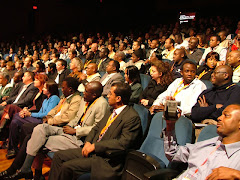
A Cross section of over 800 engineers who attended the celebrations as they are keen listening to the Minister’s speech.

On electricity production, Tanzania still depends largely on the hydro-electric power and about 60 percent of the power supply is produced through national grid while the remaining amount is being produced by using an extra amount of electricity from gas and coal. Experience has shown that, the dependency on one source of electricity generation is too dangerous and in order to extend these sources, there is a great need to increase the level of electricity production by using extra means of production whatsoever, the minister noted in his speech. He therefore urged the ERB Board to work in close cooperation with the Contractors’ Registration Board (CRB) in the country to make sure that there is a proper working system whereby contractors and engineers have full professional background before executing their jobs. The minister is on the view of the fact that many are not professionally trained an aspect that results into dubious and shoddy construction. The Chairman of ERB Professor Ninatubu .M. Lema noted while addressing participants that the construction industry grows faster than before. According to him, actors in the engineering industry are extremely busy in reshaping towns, cities and the country at large. Despite the fact that the industry gets a number of projects in the local market, there is a need to build capacity to local engineers in order to ensure efficiency and quality. According to him, there are limited financial resources to the industry and this is mainly due to various constraints in financial institutions. ERB is looking forward to building capacity and empowering local contractors to undertake much larger projects inside and outside the country.

First Deputy Governor with the Bank of Tanzania Dr. Enos Bukuku delivering his speech during the occasion.

Construction sector is one of the industries that employs a large number of job seekers. In a key note address by Dr. Enos Bukuku, first Deputy Governor with the Bank of Tanzania, during the official opening of the occasion said that, building national capacity for infrastructure can be viewed from more that one angle. He said that there is the issue of financial capacity that can be addressed via budgetary allocations via soft loans or via issuance of infrastructure bonds. Dr. Bukuku underscores that the issue of technical capacity to build roads, dams, railways, air-ports and habours cannot be taken for granted in the processing of building capacity for infrastructure development. There is a need for taking some decisive steps and measures to nurture and facilitate the growth and development of reputable local contractors with the requisite professional skill but lack of capital and technology are the major constraints. However, he said adding that, Tanzania needs to promote trade and investment as well as the need to promote openness, connectivity and integration demands more innovative ways.

ERB Registrar, Engineer Steven Mlote delivering his speech during the occasion.

On his part the ERB Registrar, Engineer Steven Mlote said that his Board has put forward the Structured Engineers Apprenticeship Program (SEAP) as well as Continuing Professional Development Courses (CPC) so as to keep abreast with regular trainings in order to provide opportunities for engineers in the country. To achieve engineering excellence, the ERB Board has put emphasis as its main strategy, to implement both training courses for the betterment of the engineering community in the country. SEAP and CPD, the two are intensive training programs for practicing engineers in the country. The board hitherto considers these programmes as mandatory to all practicing engineers in the country. Among the most important roles being played by ERB is to ensure excellent work performances by engineers along with adherence to the laid-down norms and regulations, registration and implementation of control mechanism to ensure that the end products are well done and safe. ERB Board is one of the most important and the oldest Boards in the history of the construction industry in Tanzania. It’s a statutory body founded in 1968 and later re-established under the Engineers’ Registration Act No. 115 of 1997. The Board is responsible for monitoring and regulating the conduct of engineering practice in Tanzania, regulating engineering activities so as to enhance and strengthen the professional competence of engineers and engineering consulting firms in the country. Hitherto, the board has registered 8,055 engineers in the country. The move to split was vital because prior to ERB Act amendment, the earlier Board included other professions such as Quantity Surveyors and Architects in its fold. Since the operation of the latter two distinct professions differed from engineering, and that engineering is indeed a wide discipline, there was a need to cater for only engineering professionals to increase their efficiency and cut on possible clumsiness and duplication of work. To implement its mandate, the Board has the capacity to screen, generate and effect engineering applications as well as offer solutions to engineering-related problems. It is the engineers who conduct research on design, manage operations, maintain and repair structures, machines, plants and equipment.

Former ERB Chairman Professor Burton Mwamila exchanging some views with other stakeholders during the occasion. Professor Mwamila is among the architects of this important engineers’ gathering in the country.

To run all these functions smoothly, the Board resolved to dedicate a special day each year in order to put in memory engineers’ activities after having appreciated the importance of the engineering work in Tanzania. The idea originates from the Board’s desire to have a special forum that would stimulate and motivate local engineers in Tanzania to showcase to the general public and other stakeholders in the engineering sector what they can accomplish towards national development. According to Engineer Mlote, the purpose of introducing the Annual Engineers’ Day in Tanzania was to provide an opportunity for engineers to interact, exchange professional experiences so as to reinforce their role in stimulating and spearheading the socio-economic development. Other objectives were as follows down here, to recognize engineers’ companies and organizations that contributes to a greater extent the engineering profession for the country’s development. To encourage Tanzanian engineering students who pursue engineering professional studies from various higher learning institutions accredited in the country, and also award the best performing students in every engineering professional levels. To entice Tanzanian youths especially those in secondary schools to become more interested to join with the engineering profession. To enable the general public to recognise precise contribution issued by Tanzanian engineers in all levels of disciplines To enable the engineering community to show up to the general public what Tanzanian engineers can do for the sake of our country in terms of economic development, this is by way of exhibition done by training institutions, research institutes, consultancy and engineering firms. To enable engineers’ employers as well as users of engineering services in a bid to fid out the ability of the indigenous engineers and their consulting firms.

This is the entrance leading to the conference hall at Kunduchi Beach Hotel.

The occasion is greatly honoured as an achievement of the Board while engineers make use of the event to chart out strategies that would enable them to excel on matters of national significance. The essence of the AED and the activities that goes alongside it is of great significance not only to engineers but also to the wider Tanzanian community.
Through AED the board is able to update the government about engineers’ problems in their various activities and vice versa. The feedback the board receives from participants gives it an impetus in deciding the way forward. Furthermore, the AED being an annual event is meant to provide a forum for recognizing engineers who perform exemplarily in their various undertakings and thereafter the board confers awards to different categories of performances and promotions of the aspects of academic, research and development, consulting and contracting, and manufacturing service industry. Other activities in the event include learned discourses, technical and commercial exhibitions conducted by various engineering firms. The Board’s performance report for the past year, status report on the Structured Engineers Apprenticeship Program (SEAP) along with the status report of implementation of the board’s strategic action plan are presented. SEAP report made available by the Board this year shows that a total of 1,050 engineers have benefited from this program which h is currently financed by the government and are fit for their work wherever appropriate, and have also enough experience.

The Minister for Infrastructure Development Dr. Shukuru Kawambwa as a guest of honour presented awards of excellence to University students who excelled in their final engineering exams from various higher learning institutions. Here he is seen giving an award of certificate to Engineer Amin Mzava of the UDSM who excelled in his exams for the academic year 2007/08 in Computer Engineering with Information Technology. Engineer Amin is currently working with COWI Consultants based in the city.

SEAP is therefore intended to ensure that trainee engineers are equipped adequately so that they pursue their professional careers with precision and confidence. This is in accordance with the key areas of the new amendment Act No. 24 of 2008 of the Board that envisage planning, arranging, coordinating and overseeing the professional training of local graduate engineers. The Board collaborates with the Tanzania Commission for Universities and other relevant institutions on the accreditation of engineers for training of engineers. The new Act recognizes that technicians in engineering are important ingredients in the performance of engineers and the development of construction industry. Outlining the main achievements of the Board since its re-establishment in 1997, Eng. Mlote noted that, in 2002, 2004, 2006 and 2007 respectively, his Board carried its work in all Tanzania’s mainland town councils and helped increased the ability of engineers through SEAP training. Scores of professional engineers in towns and in various district councils in the country have increased from 53 in 2002 to 206 in 2007, and 22 technical engineers have increased up to 53 from the same year up to 2007.

Augustine Alexander, as she is called, is a lady who excelled in her Civil Engineering Exams from the UDSM civil engineering dept was also among the awardees who became the best performing student for the academic year 2007/2008.

According to him, 54 graduate engineers have increased to 249 in 2006 an aspect which has made most councils in the country to have a total of 508 engineers as up to 2007 compared to 129 in 2002. However, it’s evident that engineering situation in these councils is now better than before, and the Board anticipates good performance in future, this is together with the construction of important infrastructure such as roads, water, electricity etc. The Board is striving hard to get all engineers trained under this program, but lack of enough budget for SEAP training courses is a great impediment. According to him, it’s only 22 percent of the whole budget. Other activities the Board contends with includes, site inspection in all construction projects including in all big mining sites in the country. The essence of doing this is to ensure that foreign engineers who are employed to carry on these activities in these project sites have enough experience and skills and furthermore they must be registered by the Board. The Board has helped 263 engineers to get employment and 109 employers have managed to get competent professional engineers of various disciplines, this is after linking with the Board which has for long been establishing a link with employers in terms of working tom ensure good professionalism. The main challenges facing the engineering profession in the country is that many engineers shun this profession and joins other professional fields for reasons that it is not paying well, bearing in mind that engineering studies are very tough to understand.

Professor Burton Mwamila in a te-etee with one of the stakeholders outside the conference hall. This was breakfast time.

Many Tanzanian students do not want to undergo engineering studies on the claims that the content subjects taught are very tough and if successfully completed their benefits are too little compared to other professional jobs. Most engineering firms are reluctant to use professional designers or engineers and instead use unprofessional people who have less knowledge of engineering profession for reasons that the professional bodies are more expensive. Either they use a trick of consulting professional bodies and put on their names on the sign boards at their construction sites on the pretext that are the ones who does the job whereas is not. However, Eng. Mlote said in his speech, and assured 0participants that is what happens in some of the high rise buildings undergoing construction in some towns in the country. However, he urge that, in order to curb the escalating habit which is a challenge, the Board has laid down strategic means of doing site audits, the work that it does in collaboration with other Boards so as to net the culprits. The audit works involves also to find if such sites have enough workers with professional experience on their projects and scrutinize all workers carrying the activities in various industries to see if they have the ability to supervise such construction projects. In view of this, in order to avoid shoddy construction Eng. Mlote urged fellow engineers to be trustworthy, innovative and work with strong commitments to better quality work and the value of money as directed in the code of conduct and ethics of engineers. However, he said that the habit would restore engineers’ dignity and trust to the community and assured all engineers that his Board would strictly follow the laws and rules to ensure that engineering profession is not disregarded ion any way. As he read his speech which was prepared in Kiswahili language, the registrar has also emphasized on various steps that should be taken by the government in order to enhance the remunerations of the engineering professionals and that measures should be taken to improve their working environment in the country. He also assured the participants that in order to strengthen the need for quality engineering work in the country, his Board would arrange consultancy firms which would be divided in three categories in order to facilitate the effective implementation of their day to day’s activities.

ERB invited few people from outside the country to celebrate together and exchange views, among them was a Registrar of Kenya’s Engineers’ Registration Board, Engineer Michael Kamau. Engineer Kamau is also the Permanent Secretary of the Ministry of Roads of the Republic of Kenya. He was among the distinguished guests who graced the occasion. He is seen saluting Tanzanian engineering community members during the occasion. Among the significant points he noted was a bilateral cooperation that the East African Countries needs in order to build a firm infrastructural facilities for these countries’ economic development.

This year’s engineers’ day drew participants from all corners of the country signifying that ERB is now able to reach out to all engineers in the country. ERB also invited few participants from the Republic of Kenya, among them was the Chairman of the Kenya’s Engineers Registration Board who is also the Permanent Secretary in the Ministry of Roads. Engineer Michael Kamau. According to ERB Board, it’s clear to engineers that the engineering community in Tanzania is a working brigade for stimulating and spearheading socio-economic development in the country. In his message to Tanzanian engineering community, Mr. Kamau said that the cooperation in between Tanzania and Kenya must be focused on every areas of cooperation, the peer mechanism is hereby in between the two countries. He said that almost US$ 1bn is disbursed by his government in collaboration with donor partners to build the most required infrastructural activities in the counrtry. He therefore asked Tanzanian engineers to go to his country and work for the benefit of the East African Community.